Hearing that you need a procedure involving your veins can feel overwhelming especially when it involves something as important as the inferior vena cava. For many patients, the fear comes from not knowing what’s going to happen.
The truth is, procedures involving the inferior vena cava are designed to protect you, not scare you. They are often recommended when there’s a risk of dangerous blood clots travelling from your legs to your lungs. Once you understand how everything works, the entire process becomes much less intimidating.
Table of Contents
The Role of the Inferior Vena Cava in Your Body
A Quiet but Essential Vein
The inferior vena cava is one of the largest veins in your body. It runs along your spine and carries blood from your lower body back to your heart.
Unlike arteries, it doesn’t actively pump blood. Instead, it relies on natural pressure changes in your body like breathing to keep blood moving. Most of the time, it does this job quietly and efficiently without you ever noticing.
When Things Go Wrong
Problems begin when blood clots form in the legs. These clots can travel through the inferior vena cava without causing any warning signs. If one reaches the lungs, it can block blood flow, a serious condition known as a pulmonary embolism.
That’s why doctors take issues related to the inferior vena cava very seriously.
Why Some Patients Need a Filter Instead of Medication
When Blood Thinners Aren’t Safe
Blood thinners are usually the first line of treatment for clots. They help prevent clots from growing or forming.
But not everyone can take them. If you’ve recently had surgery, suffered a serious injury or are at risk of bleeding, these medications may not be safe for you.
A Different Approach to Protect the Inferior Vena Cavat
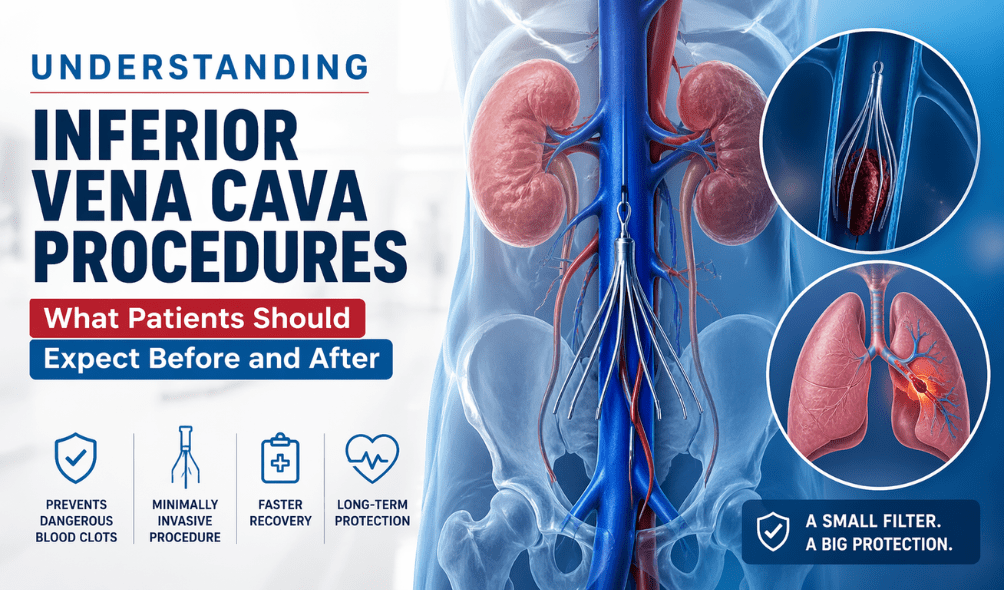
In these situations, doctors may recommend placing a filter inside the inferior vena cava. Think of it as a safety net. it allows blood to pass through normally but stops dangerous clots from reaching your lungs.
This approach protects your body without interfering with its natural processes.
How an Inferior Vena Cavat Filter Actually Works
A Small Device with a Big Job
The filter used in the inferior vena cava is a small, metal device that looks a bit like an umbrella or a tiny cage. It’s made from materials that expand once inside your body.
Once placed, it gently attaches to the walls of the inferior vena cava and stays in position.
What Happens to the Clots
If a clot travels upward, the filter catches it. Instead of moving to the lungs, the clot stays trapped in the inferior vena cava.
Over time, your body naturally breaks it down. This process happens gradually and safely, without you even noticing.
What to Expect During the Procedure
A Simple, Minimally Invasive Process
One of the most reassuring things about this procedure is that it doesn’t involve major surgery. You’ll usually be awake but relaxed with medication.
Doctors make a small opening in your neck or groin to access the vein.
Step-by-Step Placement
A thin tube is guided into the inferior vena cava using imaging technology. Once it reaches the right spot, the filter is released and expands into place.
The entire procedure is typically completed in under an hour.
Also Read: Understanding the Impact of Untreated Sleep Apnea on Health and Quality of Life
Recovery After the Procedure
The First Few Hours
After the procedure, you’ll need to lie still for a few hours. This helps the small entry site heal properly and prevents bleeding.
You might feel slight soreness, but most patients say it’s very manageable.
Getting Back to Normal Life
The good news is that the inferior vena cava doesn’t have pain-sensitive nerves, so you won’t feel the filter inside you.
Many people go home the same day and return to their usual routine fairly quickly.
Temporary vs Permanent Filters
Short-Term Protection
In many cases, the filter placed in the inferior vena cava is temporary. Once your risk of clots decreases, your doctor may remove it.
When It Stays Longer
Sometimes, the filter needs to stay in the inferior vena cava permanently especially if the risk of clots continues or if removing it could be unsafe.
Your doctor will guide you on what’s best for your situation.
Living with an Inferior Vena Cava Filter
Adjusting to Small Changes
If the filter remains in place, you may notice mild swelling in your legs over time. This happens because blood flow through the inferior vena cava can be slightly slower.
Wearing compression stockings can help keep circulation moving smoothly.
Staying on Top of Follow-Ups
Regular check-ups are very important. Your doctor will monitor how well the inferior vena cavat is functioning and make sure the filter is in good condition.
Staying consistent with these visits helps prevent future problems.
Final Thoughts
While the idea of a device being placed inside your body might sound intimidating, procedures involving the inferior vena cava are actually safe, well-planned and highly effective.
They are designed to protect you during vulnerable moments when other treatments aren’t possible. With the right knowledge and guidance, you can approach the procedure feeling informed, prepared, and much more at ease.