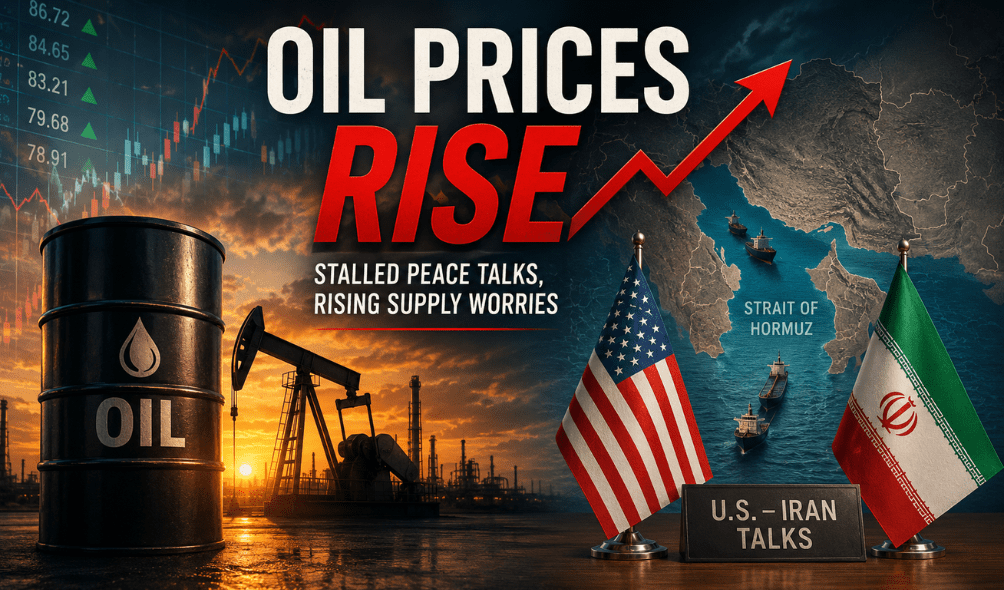
The hope for a swift diplomatic resolution in the Middle East took a backseat this week, causing a ripple effect across global energy markets. On Tuesday, oil prices rise by nearly 1%, as the delicate ceasefire between the U.S. and Iran appears increasingly unstable. For traders and consumers alike, the deadlock serves as a stark reminder of how quickly geopolitical friction can translate into a tightening of the world’s energy valves.
Table of Contents
A “Life Support” Ceasefire and the Hormuz Factor
The recent uptick in market volatility stems from a series of high-stakes demands that have left negotiators at an impasse. Tehran has recently underscored its sovereignty over the Strait of Hormuz—a narrow but vital waterway that carries 20% of the world’s oil and liquefied natural gas. When tensions flare in this region, oil prices rise almost instinctively, reflecting the fear of a total maritime blockade.
The rhetoric from Washington has been equally somber. President Donald Trump described the current peace efforts as being “on life support,” citing fundamental disagreements over war reparations and the removal of naval blockades. Iran’s insistence on compensation for war damages has created a significant hurdle, leaving the market to wonder if a breakthrough is even possible before the end of the month.
Market Projections – The Cost of Uncertainty
Energy analysts are now preparing for two very different futures. If a peace deal is miraculously struck by the end of May, we could see a sharp correction in prices. However, as oil prices rise, experts warn that an escalation or a renewed threat to the Strait could easily push Brent crude toward the $115 mark, adding further strain to the global economy.
Declining Supplies and the OPEC Crunch
The tension isn’t just political; it’s physical. New data suggests that global supply is thinning out at an alarming rate. According to a recent Reuters survey, OPEC’s oil output fell to its lowest level in over two decades this past April. This drop is a direct result of producers pulling back as the risks of navigating the Strait of Hormuz become too high.
Closer to home, the situation in the U.S. reflects this global squeeze. Oil prices rise as analysts predict a draw of roughly 1.7 million barrels in domestic crude inventories. Even with steady export flows, the demand for oil is currently outpacing the rate at which it can be safely delivered and stored.
Long-Term Stability in Jeopardy
The human and economic cost of this instability was highlighted by Saudi Aramco CEO Amin Nasser, who cautioned that the energy market might not find its footing until 2027. If the disruptions in the Strait continue, the world could lose up to 100 million barrels per week, a deficit that would ensure oil prices rise and remain elevated for years to come.
The Global Stage – Trump, Xi and New Sanctions
The focus now shifts to a critical meeting between President Trump and Chinese President Xi Jinping. This summit is particularly heavy with tension following Washington’s recent decision to sanction several individuals and companies accused of helping Iranian oil reach Chinese shores.
As oil prices rise, the outcome of these discussions will be pivotal. Whether the two leaders can find common ground on trade and energy security will determine if the market sees a moment of relief or a further slide into uncertainty. For now, the world watches the headlines, knowing that the cost of energy is tied directly to the fragile peace currently hanging in the balance.
Also Read: Middle East Crisis – Trump Rejects Iran Peace Plan as Ceasefire Frays