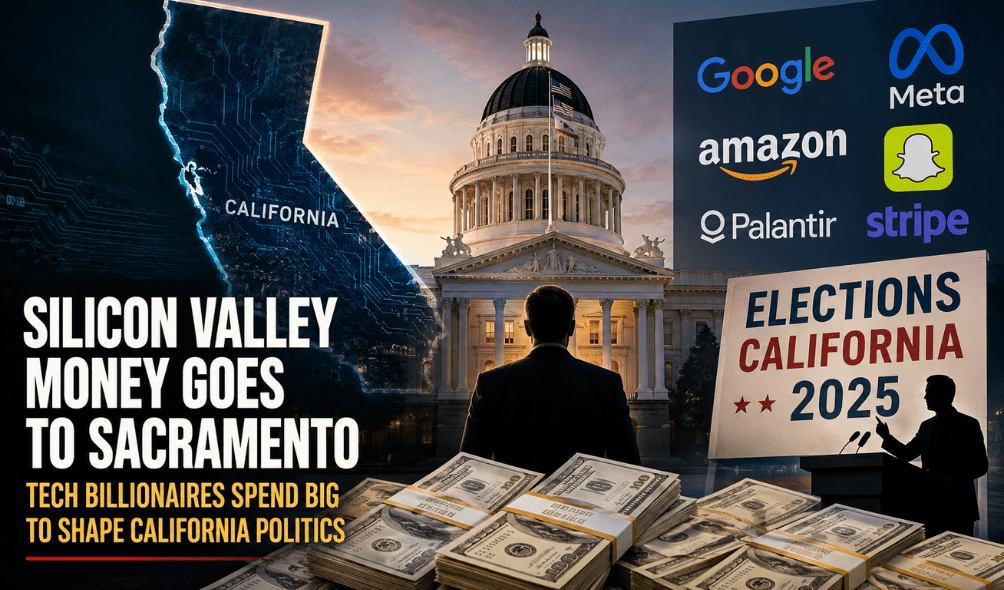
California’s 2 June primary elections have become a major battleground for Silicon Valley’s wealthiest figures and largest technology companies, with hundreds of millions of dollars flowing into campaigns, ballot initiatives and political action committees across the state.
The scale of spending has drawn attention from political analysts, watchdog groups and policy experts who argue that the technology sector is increasingly investing in political influence at both the state and local levels. From gubernatorial campaigns and legislative contests to city ballot measures and regulatory offices, tech-backed donors are seeking to shape the political landscape in California at a critical moment for the industry.
As competition in artificial intelligence accelerates and debates over taxation, labor policies and business regulation intensify, California has emerged as a key arena where technology leaders are attempting to secure long-term influence over public policy.
Table of Contents
Silicon Valley’s Political Investments Reach New Heights
The latest election cycle has seen technology executives, entrepreneurs and major corporations commit significant resources to political campaigns throughout California.
Among the most notable contributors is Google co-founder Sergey Brin, who has directed substantial financial support toward efforts opposing a proposed billionaire tax that voters are expected to consider later this year. The proposed measure would impose a one-time tax on the state’s wealthiest residents, with revenues earmarked for public programs including education, healthcare and food assistance.
Political finance records show that Brin has become one of the most prominent donors involved in the campaign against the tax proposal. In addition to statewide efforts, he has also contributed to campaigns connected to local tax-related measures in San Francisco.
Meanwhile, crypto entrepreneur Chris Larsen has emerged as another influential political spender. Through various political action committees, Larsen has funded campaigns involving statewide offices, legislative races and ballot initiatives across California.
Experts Warn of Growing Political Influence
Political observers argue that the influx of technology money is about more than supporting individual candidates.
According to policy experts, major donors are investing in political relationships that could shape California’s regulatory agenda for years to come. Given California’s position as the home of many of the world’s leading technology companies, decisions made by state lawmakers often influence national and global policy discussions.
Analysts suggest that technology companies increasingly view political engagement as a strategic necessity, particularly as governments examine potential regulations for emerging technologies such as artificial intelligence.
The growing overlap between economic power and political influence has raised concerns among some academics and advocacy organizations, who argue that concentrated financial resources can significantly impact democratic processes.
Why California Matters to the Tech Industry
California occupies a unique position within the global technology ecosystem.
The state is home to many of the world’s most influential technology companies, venture capital firms and AI developers. As a result, legislative decisions made in Sacramento often carry implications far beyond state borders.
Artificial Intelligence Has Increased Political Stakes
Industry leaders view the current political environment as especially important because of rapid advances in artificial intelligence.
As lawmakers consider regulations covering AI development, data privacy, consumer protections and business practices, technology companies have become increasingly active in political advocacy efforts.
Supporters of industry involvement argue that excessive regulation could slow innovation and reduce competitiveness. Critics, however, contend that stronger oversight may be necessary to address societal risks associated with emerging technologies.
The debate has transformed California elections into a significant policy battleground for the future of AI.
Lobbying Spending Continues to Grow
Campaign contributions represent only one aspect of the industry’s political activity.
Technology companies have also expanded their lobbying operations in California, spending tens of millions of dollars to engage with state policymakers. Reports indicate that technology sector lobbying expenditures have reached record levels, surpassing spending from several industries that traditionally rank among the state’s most influential political players.
The increase underscores California’s growing importance as a regulatory center for technology-related issues.
Tech Industry Backs a Preferred Candidate in Governor’s Race
Among the numerous candidates participating in California’s gubernatorial contest, San Jose Mayor Matt Mahan has attracted significant attention from technology executives and investors.
Mahan’s background in the technology sector and his connections within Silicon Valley have helped him secure support from a broad range of industry leaders.
Before entering public office, Mahan worked in technology and entrepreneurship, building relationships with prominent figures throughout the sector. Those connections have translated into substantial fundraising support during his campaign for governor.
Donations Flow From Across Silicon Valley
Campaign finance disclosures indicate that Mahan has received backing from current and former executives associated with numerous technology companies.
Supporters include individuals connected to sectors ranging from social media and software development to e-commerce, fintech, gaming and artificial intelligence.
The breadth of support has led some political observers to characterize Mahan as the technology industry’s preferred candidate in the gubernatorial race.
Critics Question Industry Influence
Not everyone has welcomed the surge of technology-sector support.
Some labor leaders, elected officials and progressive activists have expressed concerns about the role of wealthy donors and corporate interests in shaping California’s political future.
Critics argue that large-scale campaign contributions can create perceptions of undue influence and potentially shift policy priorities toward business interests.
Mahan, however, has rejected suggestions that donor support would influence his decision-making. He has maintained that his focus remains on serving communities and addressing statewide challenges rather than advancing the interests of any particular industry.
Polling Challenges Persist
Despite strong fundraising numbers and support from influential donors, Mahan has faced challenges gaining broader voter traction.
Polling throughout the campaign has suggested that financial support alone may not be sufficient to secure widespread electoral momentum. Political analysts note that while campaign spending can increase visibility, voters ultimately determine election outcomes.
Technology Money Reaches State and Local Campaigns
Beyond the governor’s race, technology-backed spending has spread across nearly every level of California politics.
From state legislative contests to local ballot measures and county-level races, industry-funded political action committees have become increasingly active.
Chris Larsen Expands Influence Through Multiple Political Committees
Among the most active donors, Larsen has supported several political committees focused on different policy goals.
Some of these organizations are involved in campaigns related to taxation and economic policy, while others support candidates seeking statewide offices or legislative seats.
The broad range of investments reflects an effort to influence multiple areas of government rather than focusing exclusively on a single race or issue.
Insurance Commissioner Race Draws Significant Attention
One of the contests receiving notable financial backing is the race for California’s insurance commissioner.
Political committees supported by technology industry donors have invested heavily in candidates competing for the position, highlighting the growing importance of regulatory offices that oversee key economic sectors.
Observers note that these races often receive less public attention than gubernatorial or congressional contests despite their significant policy impact.
Legislative Races Become Strategic Priority
Political analysts say technology donors have increasingly focused on California’s state legislature.
Rather than concentrating solely on high-profile statewide campaigns, donors have directed substantial funding toward assembly and senate races throughout the state.
Focus on Open Seats
According to election observers, many technology-backed organizations have targeted open legislative seats where no incumbent is seeking re-election.
This approach is viewed as a long-term strategy designed to build relationships with future lawmakers early in their political careers.
Several candidates running in competitive legislative districts have received substantial support from political committees funded by technology executives and companies.
Major Companies Join the Effort
Technology giants including Google and Meta have supported political committees that distribute funding to legislative candidates across California.
These organizations have invested in multiple races, particularly in regions where competitive contests could influence the future balance of power in the state legislature.
Supporters describe the effort as an investment in leadership and economic growth, while critics view it as an attempt to shape policymaking through concentrated financial influence.
Local Politics Also Feeling the Impact
The influence of technology money extends beyond statewide and legislative contests.
City elections, local tax measures and municipal policy debates have increasingly attracted financial support from technology-affiliated donors and organizations.
Political Activity Expands Into Communities
Political action committees and nonprofit advocacy groups linked to Silicon Valley interests have sponsored voter outreach campaigns, distributed election guides and funded communications promoting preferred candidates and policy positions.
These efforts have appeared in various communities throughout California, reflecting a broader strategy that extends beyond traditional statewide politics.
Multiple Fronts of Engagement
Political watchdogs argue that the technology sector is pursuing influence through several channels simultaneously.
These include campaign contributions, lobbying efforts, public advocacy campaigns and support for issue-based organizations.
Supporters contend that such participation reflects legitimate civic engagement by companies and individuals affected by government decisions. Critics argue that the concentration of financial resources among a relatively small group of wealthy donors raises important questions about political equity and representation.
The Bigger Picture – A Long-Term Battle for Influence
The growing involvement of Silicon Valley in California politics reflects broader tensions surrounding technology, economic power and public policy.
As artificial intelligence reshapes industries and governments debate new regulations, technology companies appear increasingly determined to play an active role in the political process.
Whether these efforts ultimately influence election outcomes remains uncertain. However, the scale of spending demonstrates that California’s political future has become a critical priority for some of the world’s most powerful technology leaders.
With debates over taxation, labor policy, business regulation and AI governance expected to continue, the relationship between Silicon Valley and California politics is likely to remain under close scrutiny in the years ahead.
Also Read: Jerome Powell Warns Against Political Pressure on Fed and Democratic Institutions During JFK