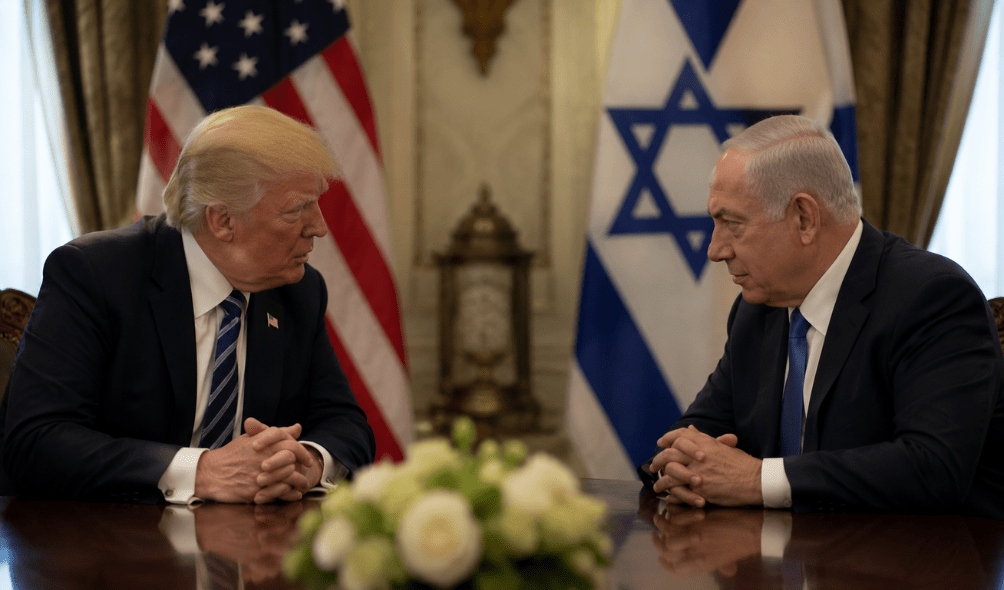
For nearly two years, Israeli Prime Minister Benjamin Netanyahu’s trips to the White House followed a familiar routine: a red-carpet welcome, a firm handshake and public statements celebrating an unbreakable US-Israel bond. Netanyahu’s meeting with Trump this week looks set to break from that pattern.
The tone between the two leaders has cooled considerably since their last sit-down five months ago. What began as tight battlefield coordination and mutual praise during the early days of the Iran conflict has given way to a noticeably tenser dynamic, with Trump reportedly venting in blunt, unfiltered language about the ally who has long positioned himself as Washington’s most reliable partner in the Middle East.
Table of Contents
A Seventh Visit, But Under Different Circumstances
This marks Netanyahu’s seventh trip to Washington since Trump began his current term, more than any other foreign leader has made. Yet this visit carries different stakes. Netanyahu returns home to face voters in an upcoming election and he needs to show that his relationship with Trump remains solid, even as cracks have become harder to hide.
Israeli and American sources say Netanyahu spent weeks angling for a formal invitation to the White House, hoping to brief Trump on the trajectory of the Iran conflict and to push back against any diplomatic compromises Washington might be considering. Trump, however, was reportedly reluctant to commit to the sit-down. Some administration officials grew irritated by what they viewed as an Israeli strategy of using press leaks to pressure the White House into scheduling a meeting.
The turning point came with the funeral of Senator Lindsey Graham this week, which gave both leaders a natural opportunity to meet, even though their conversation will take a back seat to the larger memorial proceedings.
A senior US administration official told CNN that Trump’s bond with Netanyahu remains “strong,” describing Israel as a nation with “no greater friend” than the American president and crediting joint military action for making the region and US allies safer by curbing Iran’s nuclear ambitions.
From Battlefield Partners to Diverging Priorities
Back in February, when the two leaders last met in person, they set the stage for what would become a coordinated military campaign against Iran. The initial strikes were held up by both governments as proof of seamless cooperation. But as the fighting stretched on without delivering the regime change that many in Washington and Jerusalem had quietly hoped for, the partnership began showing strain. Netanyahu wanted to maintain military pressure on Tehran; Trump wanted a way out of an open-ended conflict.
Before the war started, Netanyahu and others reportedly persuaded Trump that the campaign would be short-lived and contained. Months later, with the conflict settling into an uneasy and costly stalemate, Trump’s frustration has boiled over in private, according to a US official, including profanity-laced exchanges directed at Iran’s leadership for failing to capitulate as quickly as he’d anticipated.
Ahead of this meeting, Netanyahu is expected to walk Trump through updated intelligence on Iran’s ongoing nuclear and military reconstruction efforts. An Israeli source noted, though, that Israeli officials don’t expect Trump to want a return to full-scale conflict, at least not before the American elections in November.
Ceasefire Fallout and Behind-the-Scenes Tension
Netanyahu has largely avoided criticizing the April ceasefire with Iran in public, but allies within his political camp have been far less restrained, with friendly media outlets directing blame at the officials seen as architects of the truce — Vice President JD Vance, Jared Kushner and Steve Witkoff. Vance responded by accusing figures within Netanyahu’s cabinet of trying to undermine the negotiations and turn American public sentiment against the deal, cautioning that Israel risked pushing away “the only powerful ally they have left.”
Trump is well aware of the domestic political pressure bearing down on Netanyahu ahead of Israel’s national election in October and understands that his public backing carries real weight for the Israeli leader’s chances. That leverage has shown itself selectively — for instance, when Trump recently stated Netanyahu would face no arrest risk on US soil, addressing concerns raised after New York Mayor Zohran Mamdani initially declined to walk back a campaign promise to detain him.
Publicly, Trump has stopped short of blaming Netanyahu for the drawn-out conflict. Privately, though, he has reportedly called the Israeli leader “difficult” and “crazy” over his continued bombing campaign in Lebanon, which at one point threatened to unravel a fragile truce. Trump has also reportedly confronted him by phone over Israeli actions that diverged from Washington’s stated war objectives.
Lebanon, Gaza and Syria: New Fault Lines
Disagreements haven’t stayed confined to Iran. As Trump pressed Netanyahu to wind down operations against Hezbollah, Lebanon emerged as another source of friction between the two governments. According to reporting from Axios, Trump told Netanyahu bluntly during an early-June call that global opinion had turned against both him and Israel because of the continued fighting.
Israel eventually signed on to a trilateral arrangement with Lebanon roughly a month ago, but has resisted a full military withdrawal from southern Lebanon unless Hezbollah disarms first. According to an Israeli source briefed on a Sunday security cabinet meeting, Netanyahu told ministers that the Trump administration is now pushing for Israeli troop withdrawals not just from Lebanon, but from positions in Gaza and Syria as well. The same source said Netanyahu made clear he intends to resist that push.
New Disputes: F-35 Jets for Turkey and the Saudi Nuclear Deal
Two additional issues have surfaced in recent weeks, adding further complexity to the relationship. The first involves a potential US sale of advanced F-35 stealth fighter jets to Turkey, a move Israeli officials fear could chip away at the country’s long-standing military edge in the region. The second concerns a proposed US-Saudi civil nuclear cooperation agreement, which some in Israel worry could set off a broader nuclear race across the Middle East.
Trump has publicly linked progress on the Saudi arrangement to Israeli normalization efforts and a possible expansion of the Abraham Accords, although Saudi officials have neither confirmed nor rejected that connection. When asked Monday about the prospective jet sale to Turkey and Netanyahu’s objections to it, Trump made clear that arms-sale decisions rest with him alone, describing Turkey as a “tremendous ally.”
What Netanyahu Wants From This Visit
Speaking before his departure on Monday, Netanyahu said his agenda would center on Iran above all else, along with broader goals of securing Israel and expanding regional peace efforts. According to an Israeli source, Netanyahu intends to seek firm assurances that neither the Turkey jet deal nor Saudi nuclear cooperation will undermine Israel’s military advantage. He is also expected to push for progress on a new, long-term defense pact between the US and Israel to replace the expiring Obama-era memorandum of understanding.
The same source described Netanyahu’s broader strategy: moving past the war phase and toward new priorities, including a security agreement and potentially a normalization deal with Saudi Arabia, all while aligning himself with Trump on matters he can use to his advantage in the upcoming election. Netanyahu reportedly believes that dealing with Trump directly allows him to sidestep disagreements simmering elsewhere within the administration.
Publicly, Netanyahu has downplayed the friction, characterizing the disagreements as merely “tactical” and insisting the alliance remains as strong as ever. Privately, though, an Israeli official acknowledged that scheduling this meeting took longer than usual and that Netanyahu was initially “blocked” from securing a sit-down — though it remains unclear which part of the administration was responsible. The meeting only came together after Netanyahu confirmed his plans to attend Senator Graham’s funeral.
Election Pressure Raises the Stakes
The political stakes for Netanyahu could hardly be higher. Recent polling shows him falling well short of the parliamentary majority needed to win another term in October’s election. Trump has historically been one of Netanyahu’s strongest assets on the campaign trail and visibly maintaining influence in Washington matters greatly for a leader who still hopes to eventually host Trump for a pre-election visit to Israel.
Notably, this meeting is not currently expected to include the kind of public photo opportunity that has marked past visits. Their February meeting was similarly kept private, reportedly due to sensitive military planning ahead of the war. Whether this round of discretion is masking preparations for renewed military action against Iran or simply reflects lingering tension over the ceasefire remains to be seen.
Also Read: Democrats Favored to Win House, Trail in Senate Race