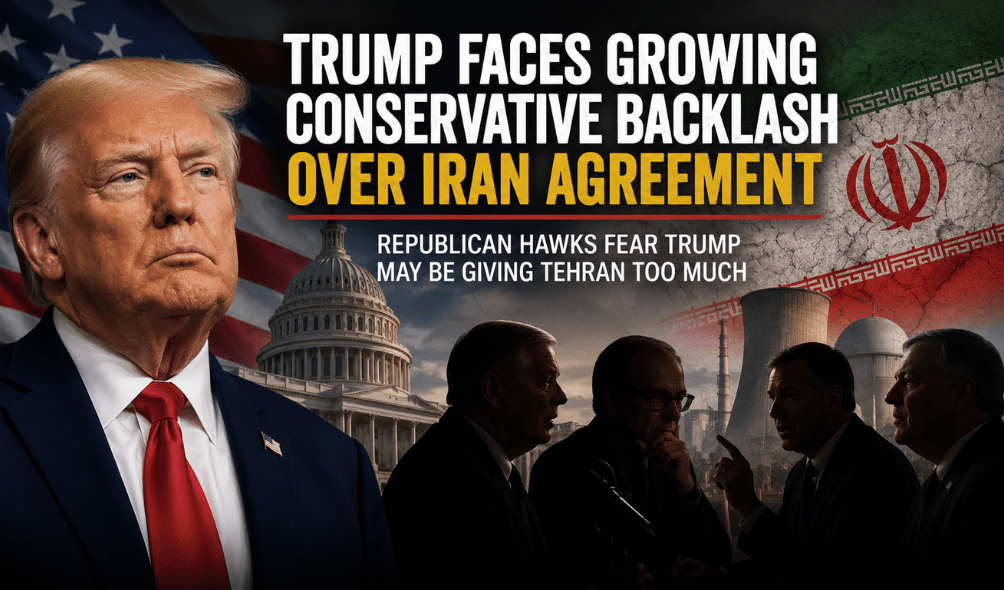
President Donald Trump is encountering increasing resistance from influential voices within the Republican Party as negotiations aimed at ending the conflict with Iran move closer to a formal agreement. While the administration continues to present diplomacy as a path toward stability, several conservative lawmakers, commentators and former officials have expressed concerns that the emerging framework could grant Tehran significant concessions.
The growing criticism highlights a complicated political challenge for Trump. After initially facing skepticism from non-interventionist supporters over military involvement in the conflict, he is now confronting backlash from foreign-policy hawks who fear the administration may be compromising too much in pursuit of peace.
Table of Contents
Conservative Allies Raise Questions About the Iran Agreement
As discussions surrounding a memorandum of understanding (MOU) between the United States and Iran gain momentum, critics within conservative circles are demanding greater transparency regarding the agreement’s details.
Although the full text has not yet been publicly released, early indications about the framework have sparked debate among Republican leaders and policy analysts.
Many of these critics have long opposed previous diplomatic arrangements with Iran and worry that the latest proposal could mirror aspects of earlier agreements they viewed as ineffective.
Concerns Grow Over Potential Concessions
Some Republican figures have voiced concerns that the agreement could allow Iran to maintain certain nuclear capabilities under civilian-use provisions. Critics argue that such measures may fall short of ensuring long-term regional security.
Questions have also been raised regarding whether the framework includes meaningful restrictions on Iran’s ballistic missile program, a longstanding point of contention in U.S.-Iran relations.
These uncertainties have fueled demands for additional information before any final agreement is presented to lawmakers and the public.
Lindsey Graham Calls for Congressional Oversight
Among the first prominent Republicans to publicly raise concerns was Senator Lindsey Graham of South Carolina. While acknowledging efforts to secure an initial agreement, Graham emphasized the importance of ensuring that Congress plays a central role in reviewing any final arrangement.
He also highlighted differences between statements made by Iranian officials and descriptions provided by the Trump administration, suggesting that lawmakers should carefully evaluate the final terms before offering support.
Debate Surrounding Vice President Vance’s Role
Graham’s comments also drew attention to Vice President JD Vance, who has often advocated a more restrained foreign-policy approach compared to traditional Republican hawks.
The vice president has reportedly played a significant role in diplomatic discussions, leading some conservatives to focus their criticism on advisers and negotiators involved in shaping the agreement rather than targeting Trump directly.
This emerging divide reflects broader disagreements within the Republican Party over how aggressively the United States should approach international conflicts.
Transparency Becomes a Major Point of Contention
A growing number of conservative commentators have questioned why the administration has not yet released the complete text of the memorandum of understanding. Several influential media personalities have argued that public scrutiny is necessary before any agreement is finalized.
The administration has offered varying timelines regarding when the document may become available. While some officials indicated the text could be released shortly, Trump suggested that publication may occur only after the agreement is formally signed.
Calls for Public Review Intensify
The lack of publicly available details has fueled speculation across conservative media and policy circles. Critics argue that releasing the full agreement would allow experts, lawmakers and voters to assess whether the deal adequately protects U.S. interests and addresses concerns surrounding Iran’s nuclear and military capabilities.
Until those details are made public, skepticism among some Republicans appears likely to continue.
Conservative Media and Policy Voices Express Alarm
Several influential conservative commentators have openly questioned the direction of the negotiations.
Some have argued that the framework appears similar to previous diplomatic agreements with Iran that Republicans criticized for years. Others have warned against relying on assurances from Iranian leaders without stronger verification measures.
These concerns have become increasingly visible as new reports and public comments provide additional clues about the possible structure of the agreement.
Concerns Over Economic Provisions
Additional criticism emerged following discussions about potential economic support tied to Iran’s reconstruction efforts.
While administration officials have indicated that any funding would not come directly from U.S. taxpayers, some conservative analysts remain concerned that substantial financial resources could strengthen Iran’s government without guaranteeing meaningful behavioral changes.
The issue has become another flashpoint in the broader debate over whether the agreement strikes the appropriate balance between diplomacy and national security.
Comparisons to the Obama-Era Nuclear Deal Continue
One of the most persistent criticisms centers on comparisons to the 2015 nuclear agreement negotiated during the Obama administration.
Many Republican hawks opposed that deal and welcomed Trump’s decision during his first term to withdraw from it. As a result, any new agreement that resembles elements of the previous framework faces heightened scrutiny from conservatives.
Policy analysts and commentators have warned that a return to provisions they previously criticized could create political challenges for the administration.
Why the Comparison Matters Politically
The comparison carries significant political weight because Trump built much of his foreign-policy messaging around opposing what he described as weak diplomatic arrangements with Iran.
If critics successfully frame the emerging agreement as a revival of policies once rejected by the president himself, the administration may face difficult questions from supporters who expected a tougher approach.
That possibility has intensified debate within Republican circles even before the final terms have been disclosed.
Trump Faces a Delicate Balancing Act
The administration now finds itself navigating competing pressures from different factions of its political base.
On one side are voters and commentators who favored ending military involvement and reducing the risk of prolonged conflict. On the other are national security hawks who believe stronger measures are necessary to counter Iran’s influence and capabilities.
As negotiations progress, Trump must convince both groups that the agreement serves American interests while maintaining regional stability.
Final Details Could Shape Public Opinion
Much of the current debate remains driven by speculation because the complete text of the memorandum of understanding has not yet been released.
Experts note that the ultimate political and policy impact of the agreement will depend heavily on its final provisions, enforcement mechanisms and verification requirements.
Until those details become available, criticism from conservative allies is likely to remain a significant challenge for the administration.
Outlook – A Critical Test for Trump’s Foreign Policy Strategy
The emerging Iran agreement may become one of the most consequential foreign-policy developments of Trump’s current presidency. While supporters view diplomacy as a practical way to avoid renewed conflict, critics fear the administration may be granting concessions that could weaken U.S. leverage.
With Republican lawmakers, conservative commentators and former administration officials continuing to scrutinize every aspect of the negotiations, the final agreement is expected to face intense political examination.
Whether the deal ultimately strengthens Trump’s position or becomes a source of prolonged controversy will depend largely on the details that are eventually presented to Congress and the American public.
Also Read: Kennedy Center Keeps Exterior Covered After Trump Name Removal Amid Ongoing Legal Battle