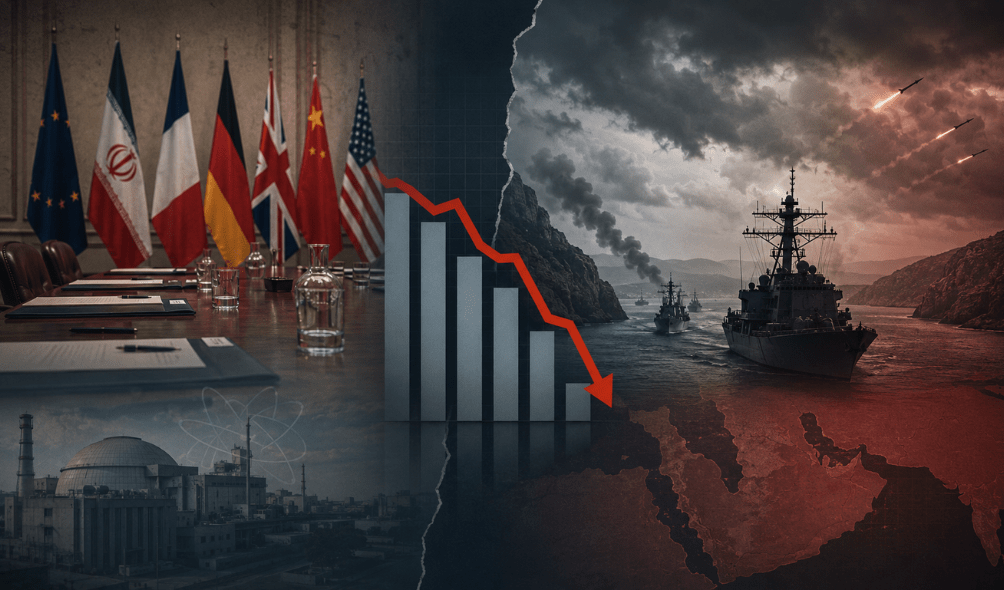
Since launching military action against Iran, President Donald Trump has repeatedly leaned on a single argument to justify the campaign to a wary public: that the nuclear agreement negotiated under President Barack Obama in 2015 was fundamentally flawed and that his administration would replace it with something far stronger. A CNN review of transcripts compiled by Roll Call’s Factbase found Trump has raised Obama’s nuclear pact in public remarks more than 35 times since the conflict began.
A newly released Washington Post-Ipsos survey suggests that message is not landing the way the White House had hoped.
Table of Contents
Only a Minority Expect Trump to Outperform the 2015 Agreement
According to the poll, just 23 percent of Americans believe Trump will ultimately negotiate a stronger nuclear arrangement than the one Obama secured nearly a decade ago. By contrast, 37 percent of respondents said they expect Trump’s eventual deal to be worse than the original — a 14-point gap that runs directly counter to the narrative Trump has been pushing. An additional 12 percent predicted the two agreements would end up roughly equivalent, while the remaining respondents did not express a clear opinion.
Skepticism is not confined to Democrats or independents. Even within the Republican Party, confidence is far from unanimous: only 54 percent of Republican respondents said they expect Trump to produce a superior outcome. That figure is propped up almost entirely by the party’s most loyal Trump supporters — 70 percent of self-identified MAGA Republicans expressed confidence in a better deal, compared with a far more divided response from non-MAGA Republicans, who split nearly evenly between expecting improvement (27 percent) and expecting a worse result (23 percent).
Independent voters expressed the least confidence of all groups, with only 13 percent believing Trump would secure better terms than his predecessor.
Why the Numbers Matter More Than They Might Seem
At first glance, some might question how many respondents can accurately recall the details of the 2015 Joint Comprehensive Plan of Action, the formal name for Obama’s nuclear agreement, especially given that Trump withdrew the United States from it roughly nine years ago and that the deal itself was notoriously intricate. But the underlying comparison still carries political weight for two key reasons.
First, the JCPOA was never especially popular while it was being implemented. Pew Research Center found in September 2015 that Americans disapproved of the agreement by a 49-to-21 margin and a Gallup survey conducted in early 2016 showed disapproval had widened to 57-to-30. That a deal already viewed unfavorably by the public is now seen as preferable to what Trump might deliver underscores just how skeptical Americans have become of his approach.
Second, Trump has spent close to five months publicly attacking the original agreement at nearly every opportunity, describing it as a giveaway to Tehran that paved the way toward an Iranian nuclear weapon. Standing next to Egypt’s president roughly a month ago, Trump claimed Iranian officials had mocked Obama personally over the agreement. During a Fox News interview earlier this week, he went further, branding it “the worst agreement that has been signed by this country” and appearing to imply, without offering evidence, that something more sinister may have motivated Obama’s decision to pursue it.
A Costly Military Campaign Hasn’t Translated Into Public Confidence
Perhaps the most striking element of the polling is the disconnect between the resources Trump has committed to the Iran conflict and the public’s lack of faith in the outcome. Unlike Obama, who reached his agreement purely through diplomatic channels, Trump chose military intervention — a decision that has resulted in more than a dozen American deaths, tens of billions of dollars in rapid spending and significant disruption to global markets. The war also remains unresolved, complicated further by Iran’s seizure of the Strait of Hormuz, a chokepoint problem that did not exist before the fighting began.
Despite that far greater investment of American lives and resources, more people trust the deal Obama achieved through negotiation alone than the one Trump is pursuing through force.
Broader Discontent Is Deepening, Not Fading
The findings align with earlier surveys showing that roughly two-thirds of Americans doubt the war will meaningfully stop Iran from eventually acquiring nuclear weapons — the very outcome Trump has repeatedly said the campaign was designed to permanently prevent.
The new Post-Ipsos data suggests the political damage may be growing rather than stabilizing. Sixty-eight percent of respondents said they did not believe the Iran war was worth fighting, a figure that surpasses peak negative sentiment recorded historically for both the Iraq and Afghanistan wars. Trump’s disapproval rating specifically on his handling of Iran has climbed to 69 percent, a troubling sign for Republicans as the 2026 midterm elections approach.
The Bottom Line
Taken together, the poll results highlight a self-inflicted political problem. By repeatedly framing the conflict as a chance to outdo Obama’s nuclear diplomacy, Trump set a public benchmark for success. Measured against that very standard, the numbers indicate the American public is largely unconvinced he is meeting it — a dynamic that could weigh heavily on Republican political fortunes in the months ahead.
Also Read: House Democrats Split Sharply as Majority Backs Effort to Halt Israel Military Aid