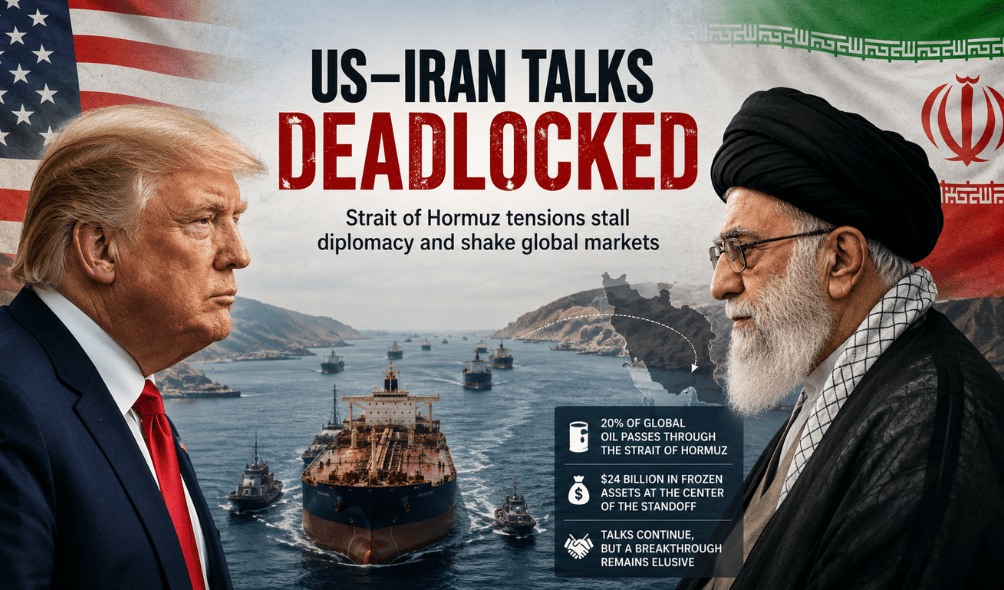
As tensions continue to simmer in the Middle East hopes for a breakthrough between the United States and Iran appear remote. Despite months of pressure, diplomatic messaging and indirect contacts both sides remain locked in a standoff. This standoff reflects more than a disagreement over sanctions or regional security.
At the heart of the impasse is a fundamental difference in how Washington and Tehran appear to view negotiations themselves.
While the United States has traditionally relied on economic pressure and diplomatic leverage to force concessions, Iran is widely seen as approaching talks from a different perspective—one that centers on holding valuable leverage until the other side agrees to pay a price for its release. That contrast may help explain why discussions surrounding Iran’s nuclear program, frozen assets and the future of the Strait of Hormuz remain stuck with no immediate breakthrough in sight.
Table of Contents
A Negotiation Built on Different Assumptions
For decades, US policymakers have viewed sanctions and economic restrictions as powerful tools capable of shaping Iran’s behavior. The strategy is straightforward: increase financial pressure until the costs become too high for Tehran to ignore.
Iran, however, has often demonstrated a willingness to absorb economic hardship if it believes doing so strengthens its negotiating position.
This difference has become increasingly visible as regional tensions have escalated. While Washington seeks to create urgency through pressure, Iranian leaders appear convinced that patience can generate greater leverage over time.
That dynamic has created a situation in which neither side feels compelled to make the first major concession.
Lessons From Previous Diplomatic Deals
Much of the current analysis is shaped by earlier negotiations between Washington and Tehran. Over the years, talks involving detained American citizens often stretched across long periods before agreements were reached. In those cases, the side holding something the other wanted possessed a distinct advantage at the negotiating table.
Observers note that such experiences continue to influence perceptions of how Iran approaches high-stakes diplomacy. Rather than responding immediately to pressure, Tehran has frequently shown a willingness to wait while external political and public pressure builds on its counterparts.
The 2023 Prisoner Exchange and the Frozen Funds Dispute
One of the most significant diplomatic agreements in recent years came in September 2023, when the United States and Iran completed a prisoner exchange that resulted in the release of five Americans held in Iran.
As part of the arrangement, approximately $6 billion in Iranian funds that had been held in South Korea were transferred to restricted accounts in Qatar. The funds were designated for humanitarian purposes and remained subject to oversight mechanisms intended to prevent misuse.
At the time, the agreement was viewed as a rare example of successful diplomacy between two governments whose relations have remained deeply strained for decades.
Regional Events Changed the Equation
However, the diplomatic progress proved short-lived. Following the October 7, 2023 Hamas attack on Israel and the broader regional fallout that followed, access to the funds once again became restricted. The decision effectively froze a key component of the agreement and added new tension to an already fragile relationship.
Since then, trust between the two sides has deteriorated further, making future negotiations even more complicated.
Strait of Hormuz Becomes the Center of the Dispute
Today, attention has shifted from prisoner diplomacy to one of the world’s most strategically important waterways. The Strait of Hormuz serves as a critical gateway for global energy supplies, carrying a substantial portion of internationally traded oil. Any disruption in the narrow maritime corridor can quickly affect energy prices, shipping costs and financial markets across the globe.
For governments, businesses and consumers alike, what happens in the strait matters far beyond the Middle East.
Why Global Markets Are Watching Closely
The importance of the waterway cannot be overstated. A prolonged disruption could trigger higher fuel prices, increase transportation expenses and place additional pressure on economies already dealing with inflation and supply chain challenges.
Even the possibility of instability in the region often causes market volatility, highlighting how closely global energy security remains tied to developments in the Gulf.
As tensions have increased, concerns about the future of shipping through the Strait of Hormuz have become a central issue in discussions between Washington and Tehran.
Iran’s Demand for Frozen Assets
Adding to the complexity are recent calls from senior Iranian officials for the release of billions of dollars in frozen Iranian assets. Iranian figures have argued that restoring access to those funds would represent a meaningful step toward rebuilding trust and demonstrating a commitment to genuine negotiations. Among the figures discussed publicly is a reported demand involving roughly $24 billion in Iranian assets, including funds linked to previous agreements.
A Question of Trust or Leverage?
The issue has become one of the most contentious points in the broader dispute. Iranian officials frame the matter as a test of Washington’s willingness to honor commitments and engage seriously in diplomacy.
Critics, meanwhile, argue that linking access to frozen assets with broader geopolitical issues risks transforming negotiations into a cycle of escalating demands and counter-demands. As a result, the debate over frozen funds has become inseparable from the wider diplomatic deadlock.
Can Economic Pressure Still Work?
The United States continues to rely heavily on sanctions and efforts to limit Iranian oil revenues as a means of influencing Tehran’s decisions. Supporters of the strategy believe sustained pressure will eventually weaken Iran’s ability to resist international demands and encourage compromise. Yet the effectiveness of that approach remains a subject of debate.
Tehran Appears Prepared for a Long Standoff
Iran’s economy has faced significant strain in recent years, including inflation, currency depreciation and reduced revenue streams. Despite those challenges, many analysts believe Iranian leaders are prepared to endure prolonged economic pain if they believe doing so strengthens their bargaining position. That calculation complicates Washington’s strategy. If Tehran remains convinced that time is on its side, economic pressure alone may not be enough to force a rapid resolution.
Growing Concerns About Wider Regional Escalation
Beyond the diplomatic arena, security concerns continue to grow. Iranian officials have warned that additional pressure or military action could lead to broader regional consequences affecting major shipping routes beyond the Strait of Hormuz. Among the areas frequently mentioned are the Bab el-Mandeb Strait, the Red Sea and other strategically important maritime corridors that support international trade.
Risks Extend Beyond the Gulf
Any expansion of tensions into these waterways would have implications far beyond the immediate region. Global trade networks depend heavily on secure maritime routes and disruptions could affect everything from energy shipments to consumer goods moving between continents. The possibility of wider instability has therefore increased international calls for restraint and renewed diplomatic engagement.
Washington Faces Three Difficult Choices
As negotiations remain stalled, policymakers in Washington appear to be weighing three broad paths forward.
Endure the Pressure Campaign
The first option is to continue applying economic pressure while waiting for financial strain inside Iran to produce concessions. While supporters believe this approach could eventually succeed, it offers no guarantee of a quick outcome.
Offer Concessions
Another possibility involves providing financial or diplomatic incentives in exchange for de-escalation and renewed cooperation. Such a move could help ease tensions but would likely face political criticism from those who view concessions as a sign of weakness.
Escalate Militarily
The final option would involve stronger military measures aimed at protecting shipping routes and countering Iranian actions directly. While this approach could alter the balance of power, it also carries the highest risk of triggering a broader regional conflict.
Why a Breakthrough Still Appears Unlikely
For now, neither Washington nor Tehran appears ready to abandon its current strategy. The United States continues to believe economic and diplomatic pressure can eventually shift Iran’s calculations. Iran, meanwhile, appears convinced that maintaining leverage and waiting out external pressure will produce better results.
Until one side concludes that its approach is no longer working, the diplomatic stalemate is likely to continue.
With the Strait of Hormuz remaining a focal point of regional tensions and global energy concerns, the outcome of this standoff could have consequences that extend far beyond the negotiating table. For now, the gap between the two sides remains wide and the prospects for a near-term breakthrough remain uncertain.
Also Read: Tensions Flare as Federal Probe Targets California’s Slow Vote Count
-
-
-

-