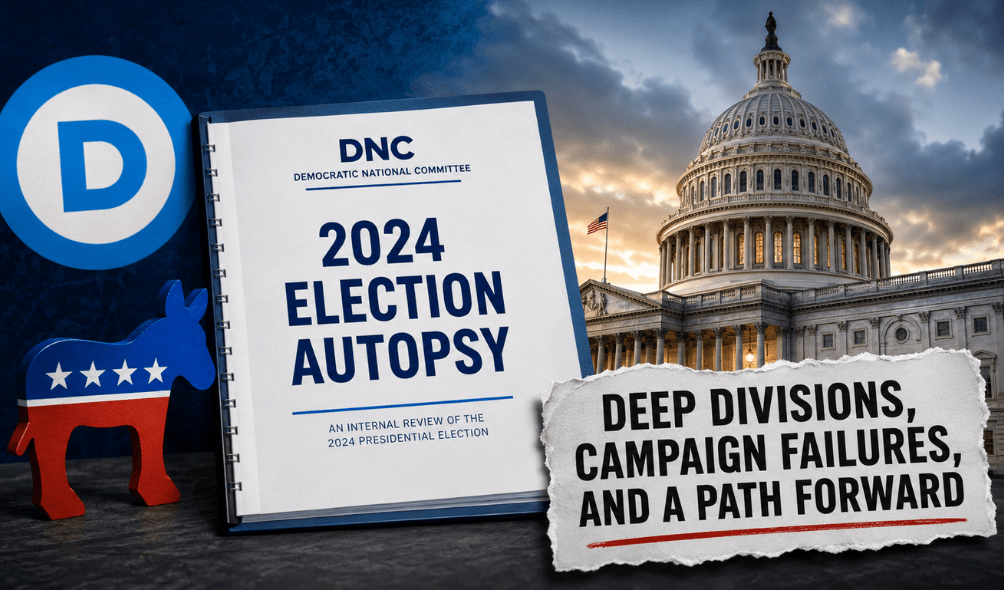
The Democratic National Committee (DNC) has finally released its long-awaited review of the 2024 presidential election, shedding light on what many Democrats believe went wrong during one of the party’s most difficult election cycles in recent years.
The report, often referred to as the party’s “2024 autopsy,” examines campaign failures, messaging problems, voter outreach struggles and leadership decisions that may have contributed to the Democrats’ loss. But the release itself has also become a major story, triggering frustration inside the party and sparking renewed debate about transparency and accountability.
For months, Democratic officials, activists and donors had been asking why the report had not been made public. The pressure eventually became too large to ignore, leading DNC Chair Ken Martin to release the document along with a public apology.
The report now offers a revealing look into the challenges facing Democrats as they attempt to rebuild ahead of future elections.
Table of Contents
Ken Martin Admits Delay Became a Bigger Problem
Democratic National Committee (DNC) Chair Ken Martin acknowledged that the handling of the report created unnecessary controversy within the party.
According to Martin, the version of the report he received late last year was incomplete and lacked supporting materials such as interview transcripts, research notes, and detailed evidence behind several conclusions. Because of those concerns, the DNC initially chose not to publish it.
However, as criticism continued to grow, Martin admitted that withholding the report only deepened mistrust among Democrats.
He said the party needed to prioritize transparency, even if the report itself was not perfect.
Martin publicly apologized to Democratic National Committee (DNC) members and party supporters, saying the situation had become “a bigger distraction” than he originally anticipated.
Democratic Leaders Raised Concerns Privately
Behind the scenes, several Democratic leaders reportedly questioned why the report had been delayed for so long.
Pennsylvania Governor Josh Shapiro was among those who reportedly expressed frustration over the lack of transparency. According to sources familiar with internal discussions, some party officials believed Democratic voters deserved an honest explanation of what went wrong in 2024.
Democratic National Committee (DNC) members had also been expecting summaries or updates about the findings but said communication from party leadership eventually slowed down.
As concerns spread across the party, the issue became increasingly difficult for leadership to contain.
Progressive Groups Pressured the DNC to Release the Report
Outside activist organizations also played a role in increasing pressure on the Democratic National Committee (DNC).
Progressive group RootsAction organized a campaign encouraging supporters to send emails demanding that the report be released publicly. According to reports, thousands of messages were sent to DNC officials over several weeks.
Even after the report was released, some activists argued it failed to address key issues that hurt Democrats during the election.
Gaza Policy Remains a Divisive Issue for Democrats
One of the biggest criticisms focused on the Biden administration’s support for Israel during the war in Gaza.
Some progressive Democrats believe the administration’s position damaged enthusiasm among younger voters and parts of the Democratic base. Critics argued the report did not spend enough time examining how anger over U.S. foreign policy may have influenced voter turnout and support.
The disagreement highlights a growing divide inside the Democratic Party between establishment leaders and progressive activists, especially on foreign policy issues.
What the Report Says About the 2024 Election Loss
The nearly 200-page report covers a wide range of political issues, campaign strategies and organizational problems that affected Democrats during the election cycle.
While parts of the document revisit political trends going back more than a decade, much of the report focuses directly on the Democratic Party’s 2024 defeat and the lessons leaders hope to learn moving forward.
Several themes appear repeatedly throughout the report.
Democrats Struggled to Connect With Voters on the Economy
One of the clearest findings is that Democrats failed to communicate effectively on economic issues.
According to the report, many voters did not feel convinced that Democratic policies were improving their lives, despite the administration highlighting economic achievements throughout the campaign.
At the same time, the report suggests Democrats were unable to effectively challenge Donald Trump’s messaging on inflation, jobs and the rising cost of living.
Economic frustration remained one of the biggest issues for voters during the election and the report argues Democrats never fully found a message that connected emotionally with everyday Americans.
Working-Class and Rural Voters Felt Ignored
The review also points to growing problems with voter outreach.
The report says Democrats have struggled to maintain relationships with working-class communities and voters living outside major cities. In some areas, the party was seen as disconnected from local concerns and everyday struggles.
According to the report, Democrats also failed to spend enough time listening to voters in regions where support for the party has steadily weakened over recent years.
The findings suggest party leaders may need to rethink how they communicate with voters across different parts of the country.
Weak State-Level Organizing Hurt the Party
Another major concern highlighted in the report involves campaign organization.
The document says many state Democratic parties lacked the funding and resources needed to compete effectively. It also points to delays in organizing voters on the ground and declining voter registration efforts in key states.
Party officials reviewing the report believe stronger local organizing could become one of the most important priorities heading into future elections.
Questions Raised About Kamala Harris’ Positioning
The report also discusses Vice President Kamala Harris and how she was prepared for the campaign.
According to the review, the White House did not do enough over several years to strengthen Harris’ national image before she became the Democratic nominee.
The report suggests earlier efforts to elevate her public role may have helped improve voter confidence and better positioned her to lead the ticket after President Joe Biden stepped aside.
This issue has become part of a larger debate within the party about leadership planning and succession.
Democrats Relied Too Heavily on Opposition to Trump
Another key argument in the report is that Democrats focused too much on criticizing Republicans instead of clearly explaining what they stood for.
The review says the party often depended on the belief that Republican candidates, especially Donald Trump, would motivate voters to support Democrats automatically.
However, the report argues voters also wanted a stronger positive vision from Democrats themselves — not just warnings about the opposition.
Party strategists now believe future campaigns may need to focus more on presenting a hopeful and practical agenda that resonates with a broader group of Americans.
The Democratic National Committee (DNC) Itself Disputed Parts of the Report
In an unusual move, the released report includes annotations from the Democratic National Committee (DNC) challenging several of its conclusions.
The annotations question certain claims, point out factual concerns and argue that some statements were not backed by enough evidence.
For example, one section criticizes the White House for not doing enough to improve Kamala Harris’ standing before she became the nominee. The DNC’s annotation beside that passage says there was “no evidence provided” for the claim.
The inclusion of these annotations shows that Democrats themselves remain divided over what exactly caused the party’s defeat.
Questions Also Emerged About the Research Process
Additional concerns surfaced regarding how the report was prepared.
According to sources familiar with the process, the DNC repeatedly requested supporting materials from the report’s author, including interview notes and transcripts but never received them.
The controversy eventually led to reports that Democratic strategist Paul Rivera, who led the project, is no longer advising the DNC.
Even with those concerns, party leaders ultimately decided it was better to release the report than continue facing criticism over secrecy.
Fundraising Challenges Add More Pressure
The Democratic Party is also facing financial pressure heading into future elections.
Recent campaign finance reports show the Republican National Committee currently holds a significant fundraising advantage over Democrats, including larger cash reserves and no reported debt.
Meanwhile, the DNC has less money available and continues dealing with financial obligations.
The funding gap has increased concerns among Democrats about how prepared the party will be for upcoming races.
Democrats Continue Searching for a Path Forward
The report’s release comes during a period of growing tension inside the Democratic Party.
Disagreements over leadership, campaign strategy, voter outreach and ideological direction have become more visible in recent months. Younger activists, progressive groups and party leaders often disagree on how Democrats should rebuild after the 2024 loss.
At the same time, some Democratic officials argue the party still has momentum in local and special elections, especially in response to Donald Trump’s return to office.
Supporters of Democratic National Committee (DNC) leadership say investments in state parties and grassroots organizing could eventually strengthen the party’s long-term position.
Still, the report makes one thing clear: Democrats remain deeply divided over why they lost in 2024 and what needs to change moving forward.
Conclusion
The release of the DNC’s delayed 2024 election review has opened a broader conversation about the future of the Democratic Party.
The report highlights concerns about messaging, leadership decisions, voter outreach, campaign organization and internal trust. But perhaps more importantly, it reveals a party still struggling to agree on what caused its defeat and how it should move ahead.
As Democrats prepare for future elections, party leaders now face the difficult task of rebuilding voter confidence while managing growing internal divisions that continue to shape the direction of the party.
Also Read: Trump Calls Texas Democrat James Talarico ‘Unelectable’ Over Vegan Diet
Also Read: Republican Midterm Risks – Trump’s Absolute Grip on the GOP Primaries