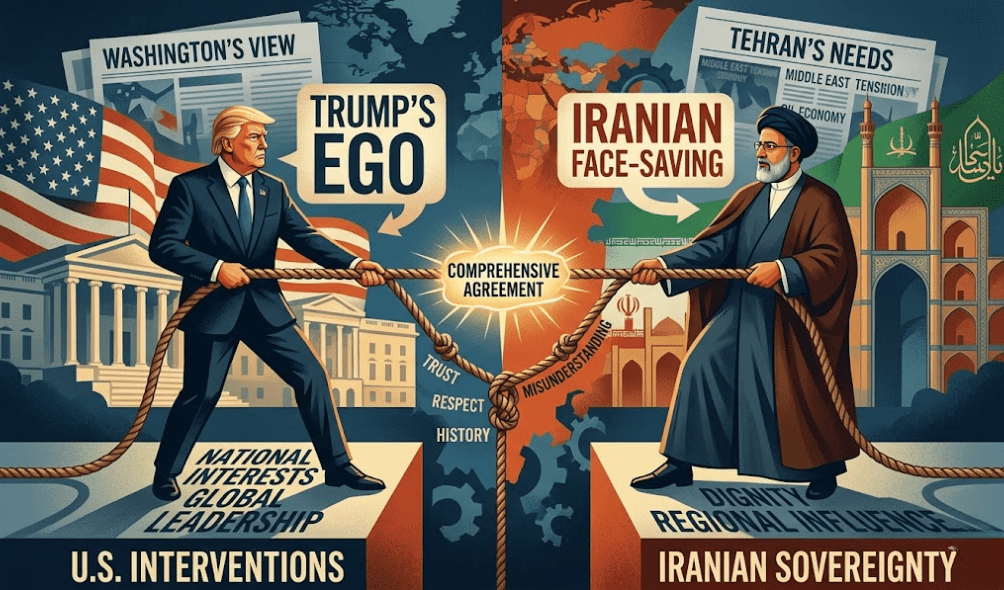
Trump and Tehran: Behind the cold calculations of nuclear throw weights and economic sanctions lies a much more volatile human element: the need to feel respected. As negotiators move closer to a framework that could finally end the simmering conflict between Washington and Tehran, a chorus of U.S. and Arab officials is sounding a quiet but urgent alarm. The biggest threat to a deal isn’t a lack of technical common ground—it’s the basic human struggle to “save face.”
In the world of high-stakes diplomacy, the hardest thing to ask a leader to do is admit defeat. For President Donald Trump and the Iranian leadership, the road to peace is currently blocked by a “dignity gap” that threatens to derail years of backchannel progress.
Table of Contents
The High Cost of an Insult
To the casual observer, President Trump’s recent descriptions of Iranian officials as “mentally ill” or “crazy bastards” might seem like standard political theater. But in the nuanced culture of Middle Eastern diplomacy, these words carry a weight that goes beyond the headlines.
“He badly wants this to end,” shared a senior Gulf official involved in the peace talks. “But he doesn’t seem to understand that for the Iranians to leave the table, they have to be able to tell their people they weren’t bullied into it.”
The Psychology of “Saving Face”
For the leaders in Tehran, “face-saving” isn’t about vanity—it’s about survival. Their entire political identity is built on the concept of mardom-salari (popular standing) and standing up to Western pressure. If a deal looks like a total surrender, the regime risks losing its grip on domestic legitimacy. Diplomats argue that for a deal to work, Trump must give his adversaries enough room to claim a “moral victory,” even if they are making massive military concessions.
Progress in the Shadows
Interestingly, the private reality of the negotiations tells a different story than the public shouting match. While the rhetoric is white-hot, the actual diplomatic machinery is surprisingly cool and functional.
Recent reports, including insights from Secretary of State Marco Rubio, suggest that a roadmap is currently being hammered out. There is even talk of a 30-day “cooling off” period designed to let both sides finalize a comprehensive agreement. The question is whether the public insults will eventually poison these private gains.
The Backchannel Bridge
“The real question isn’t whether the tone matters—it does,” noted one Arab diplomat. “The question is whether the private assurances are strong enough to drown out the public noise.” The hope among many is that Tehran has learned to treat the President’s social media posts as a separate entity from the actual terms on the table.
A History of Grudges and Broken Trust
The tension isn’t just about the present; it’s haunted by ghosts from the past. For Trump, the animosity toward Tehran is a 50-year-old grudge rooted in the 1979 hostage crisis. He is also driven by a personal mission to secure a deal that is demonstrably “better” than the one signed by Barack Obama in 2015.
Tehran, meanwhile, is nursing its own wounds. They felt betrayed when the U.S. exited the previous nuclear deal and were deeply shaken by military strikes that took out high-ranking officials. To them, the “wild comments” coming from the White House only confirm their suspicion that they are dealing with an unpredictable and disrespectful opponent.
Looking for the “North Korea Pivot”
There is a precedent for a sudden shift in tone. Many remember when Trump pivoted from calling Kim Jong Un “Little Rocket Man” to saying the two had “fell in love.” While that shift led to historic summits, it failed to produce a lasting treaty.
The fear today is that Iran might take a page from the North Korean playbook: enjoy the photo-op and the reduction in tension, but quietly pursue nuclear weapons anyway as a final insurance policy against a “decadent” opponent.
Conclusion – The Final Hurdle is Human
Ultimately, international treaties are signed by people, not just governments. For this war to truly end, both sides need a narrative of victory. If the President can manage the “North Korea pivot” without the insults, he might find a partner in Tehran ready to sign.
But if the goal is to make the other side crawl to the finish line, the deal may fall apart before the ink is even dry. In this crisis, the most valuable commodity isn’t oil or uranium—it’s the simple, human act of showing enough respect to let the other side walk away with their dignity intact.
Also Read: The Changing Tide in Maine – How Graham Platner Outpaced Governor Janet Mills