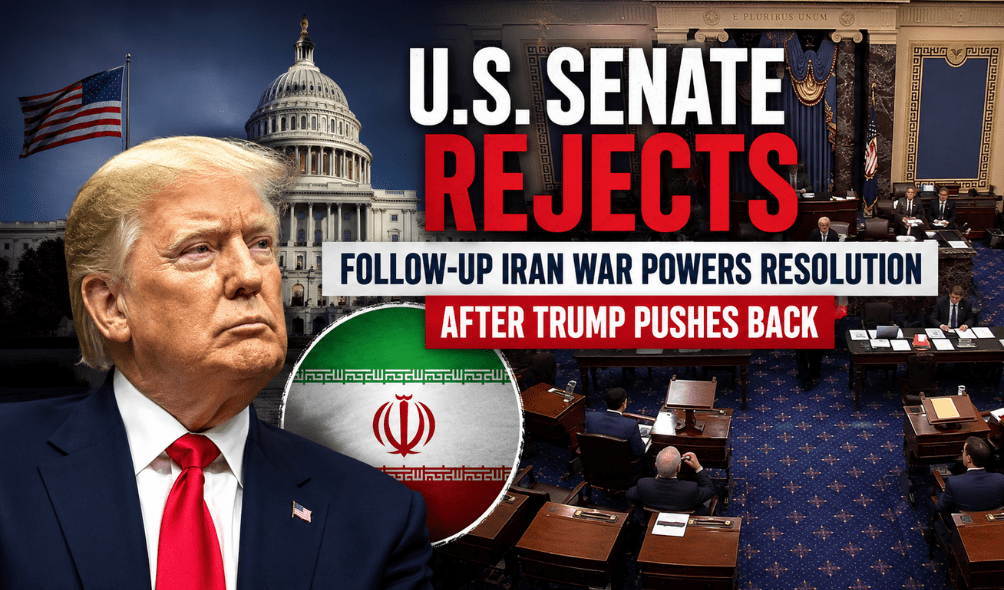
The United States Senate has rejected a follow-up resolution aimed at limiting President Donald Trump’s authority to conduct military operations involving Iran, reversing momentum from a similar measure approved just one day earlier. The late-night vote reflected shifting positions among Republican lawmakers following direct appeals from the president and renewed discussions over the balance between congressional oversight and executive war powers.
The outcome represents another chapter in the ongoing debate over how much authority a president should have to engage in military actions without explicit approval from Congress, particularly during periods of heightened tensions with Iran.
Table of Contents
Senate Reverses Course on Iran War Powers Measure
Only a day after advancing a resolution designed to restrict U.S. military involvement in the Iran conflict, the Senate voted against moving forward with another war powers proposal.
The measure failed by a vote of 47-50, with one senator voting “present.” The result marked a significant shift in support, as two Republican senators who had previously backed efforts to limit presidential war authority changed their positions.
President Donald Trump had openly criticized Republicans who supported earlier resolutions, arguing that congressional action weakened the United States’ negotiating position with Iran during sensitive diplomatic efforts.
Following Wednesday’s vote, Trump praised the outcome on Truth Social, specifically noting the changes in voting positions by two Republican senators and saying the decision sent a strong message to Iran.
Republican Senators Change Their Positions
Rand Paul Votes ‘Present’
Republican Senator Rand Paul of Kentucky, who has consistently advocated for congressional oversight of military engagements, altered his vote by choosing to vote “present.”
Paul explained that his constitutional views regarding executive war powers had not changed. However, he said President Trump personally requested that he consider the administration’s ongoing diplomatic negotiations with Iran.
According to Paul, because active hostilities appeared to be easing, he believed voting “present” would provide the president with additional flexibility to pursue a long-term diplomatic solution while maintaining his own principles regarding congressional authority over military action.
Bill Cassidy Switches After White House Briefing
Louisiana Republican Senator Bill Cassidy also reversed his earlier support for the war powers measure.
Earlier in the day, Cassidy reportedly challenged President Trump during a Senate Republican meeting, expressing frustration over what he viewed as insufficient public information regarding the conflict.
Cassidy said he questioned why the military operation had continued longer than initially expected and argued that both Congress and the American public deserved greater transparency about the administration’s objectives.
Later that day, however, Cassidy announced that he had received an extensive briefing from Vice President JD Vance and Special Envoy Steve Witkoff at the White House. Following the briefing, Cassidy stated that many of his concerns had been addressed, leading him to oppose advancing the resolution.
Some Republicans Maintain Their Original Position
Not all Republican senators shifted their stance.
Senators Susan Collins and Lisa Murkowski continued supporting the proposal to limit presidential war powers, maintaining the position they had taken during the earlier vote.
Meanwhile, Democratic Senator John Fetterman once again opposed the measure, placing him among a small number of lawmakers whose voting position differed from most members of his party.
The differing votes underscored the complex political landscape surrounding U.S. foreign policy and military decision-making.
Trump Criticizes Republican Support for War Powers Limits
President Trump has repeatedly expressed opposition to congressional efforts that seek to limit executive authority over military operations involving Iran.
After an earlier House vote passed with bipartisan support, Trump criticized Republican lawmakers who sided with Democrats, describing their actions as harmful to the country’s negotiating efforts.
Following Tuesday’s Senate approval of a similar resolution, Trump again criticized Republican supporters, arguing that their votes complicated his administration’s diplomatic strategy and weakened America’s leverage during discussions with Iran.
Wednesday’s failed vote represented a political victory for the White House, with the administration successfully persuading enough Republican lawmakers to prevent the resolution from advancing.
Senate Meeting Highlights Internal Republican Debate
Before the vote, President Trump attended a Senate Republican lunch where Iran policy became a central topic of discussion.
During the meeting, Trump reportedly criticized Republican Senators Dave McCormick and Mitch McConnell for missing Tuesday’s vote.
However, both absences had clear explanations. McConnell remained hospitalized, while McCormick was traveling aboard Air Force One with the president during the earlier Senate vote.
The discussions highlighted differing views within the Republican Party over the appropriate balance between supporting the president during international negotiations and preserving Congress’s constitutional role in authorizing military action.
Democrats Continue to Push for Congressional Oversight
Democratic lawmakers maintain that Congress should play a larger role in approving military action, even as tensions between the United States and Iran appear to have eased following a preliminary agreement.
Virginia Senator Tim Kaine has argued that passing a war powers resolution remains important because it establishes that future military action against Iran should not proceed without congressional involvement.
Supporters of the legislation believe such measures reinforce constitutional checks and balances while ensuring that decisions involving armed conflict receive broader democratic oversight.
Opponents, however, contend that limiting presidential authority during ongoing diplomatic negotiations could reduce the administration’s ability to respond quickly to international developments and weaken the country’s negotiating position.
Ongoing Debate Over Presidential War Powers
Wednesday’s vote marked the 11th Senate vote this year concerning an Iran-related war powers measure, demonstrating that the issue remains a recurring point of debate on Capitol Hill.
The repeated votes reflect broader questions about executive authority, congressional responsibility, national security and foreign policy decision-making. While the latest resolution failed, lawmakers from both parties continue to disagree over where the balance of power should lie during periods of international conflict.
As diplomatic engagement with Iran continues, the debate over presidential military authority is expected to remain an important issue in Congress, particularly if future developments prompt renewed discussions over U.S. involvement in the region.
Also Read: House Republicans Advance Bill to Ban Lawmakers From Political Prediction Markets