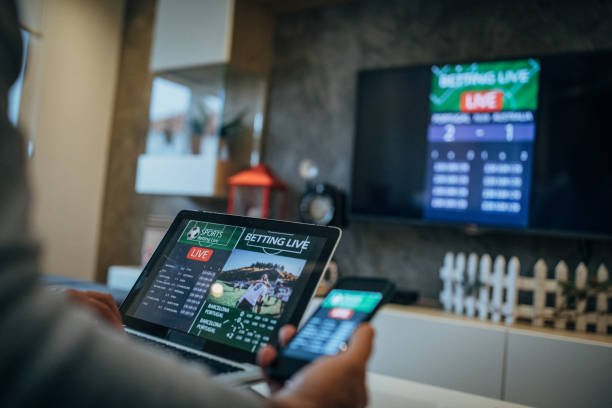
In-play sports betting is never as straightforward as it looks: every match you watch, the numbers and odds on your screen are pivoting in real time, revising themselves almost the second something happens. A goal, a penalty, an injury or a change in possession can all factor in.
The scale of the technology behind this process is significant, with sports data provider Sportradar covering more than 1 million sporting events each year. Each live market relies on technology working behind the scenes to collect, transmit and process information at tremendous speed.
In addition to tracking what is transpiring on the field, betting platforms must take incoming data, update probabilities on the fly, freeze markets when needed and handle a surge of bets, all while the action is unfurling. Most people probably don’t think twice about this when they’re following a match. However, understanding how it functions gives you a sounder sense of why live betting can feel so quick and responsive.
Table of Contents
Live data feeds and Betway’s in-play markets
Take Betway sports betting, as an illustrative example; their sportsbook covers live betting across the big sports (football, tennis, hockey, basketball) with live odds switching from play to play. When a footballer scores or is sent off, the entire market reacts in seconds. Equally, tennis odds move after a break of serve. All those small price modifications begin with one thing: up-to-the-second match data.
To make this work, Betway (like every top sportsbook) counts on specialist data providers who collate event info and beam it to the platform. Sportradar, for example, pulls data from over 80 sports and 500 leagues, totaling about 750,000 events every year. These feeds include everything ranging from updated scores to player stats and major incidents. So, the accuracy of Betway’s live odds all comes down to getting the correct info as fast as possible.
Why speed matters: low-latency data
When Betway sports betting, timing is everything here. “Latency” simply denotes the gap between when something occurs and when that info hits the betting platform. Even a few seconds’ delay can make a massive difference: think about how fast a basketball team can rack up points, or how quick a tennis rally can turn.
To keep up, operators drum up official data partnerships. Genius Sports, for instance, works with Football DataCo to send official match data from thousands of games straight from the stadium, typically in under a second. When you see Betway’s odds flip instantly, this is why. The tech, the feeds and the raw connection speed are just as critical as a streamlined, tech-powered website.
How odds recalculate in real time
Obtaining the information is merely step one: Betway sports betting and other providers then need algorithms that can grab the latest event, like a goal, a shift in possession, a player in foul trouble and immediately calculate what that means for the odds. Models crunch the data, approximate it against what is already on the books and spit out new lines.
Each sport requires its own logic: in tennis, odds pivot based on the server, score and set; basketball models look at time left, the score gap and possession. If you’re betting on Betway in real time, those changeable prices show their system is continuously rehashing every play, recalculating after critical moments so old odds don’t drop through.
Market suspensions and verifying what really happened
Sometimes you’re viewing everything and suddenly can’t place a bet, as Betway sports betting markets get suspended for a moment. This doesn’t mean the platform is down, just that something important (like a possible goal or a disputed foul) occurred and the system needs to double-check it before taking any more bets.
Verification here is critical, where systems sort through all the incoming data, logging confirmed events, provisional updates or corrections to earlier reports. Betting platforms like Betway do this to confirm prices and payouts stay fair. So, a briefly closed market is actually a sign that the system is performing as planned.
Geolocation, security and making sure bets are legit
When Betway sports betting, generous odds and rapid feeds are significant, but there’s more. In the US, for example, sportsbooks must verify you are geographically within a state where betting is legal. That’s an assignment for geolocation tech, combining the position of your device and other checks to confirm you are actually where you claim.
Meanwhile, regulators, like those in North Carolina, require every sportsbook to ascertain a customer’s location before a bet. All this occurs alongside account ID checks and secure payment systems. For Betway or any other operator, even if the site looks familiar, you still must be sure you’re allowed to place that bet, because laws and licenses differ by state.
Why all this tech matters
In-play Betway sports betting operates successfully only because a series of systems work seamlessly in tandem. Data collection spots what just transpired; fast transmission gets that info to the proper place. Then, odds models crunch numbers and update prices fast, as market controls pause things to check for errors. Last but not least, transaction tech verifies your bet is real and locks in the odds.
So, the next time you’re using Betway or another sportsbook, look beyond just the sleek interface; pay attention to how swiftly the data updates, how markets are managed, how clearly rules are posted and how reliable the payouts are. No system can control the confusion of live sports, but the right technology can make the betting side as fair and accurate as possible.
-

-

-

-