Oil Prices Hit $120 as Iran Blockade Fears Intensify Global Supply Concerns
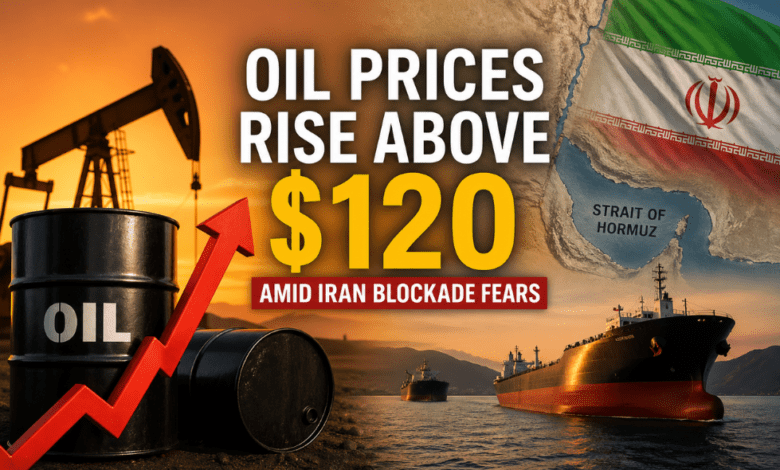
Global oil markets witnessed a sharp surge as benchmark crude prices crossed the $120 mark, reaching their highest levels since 2022. The sudden spike comes amid growing concerns that geopolitical tensions involving Iran could significantly disrupt global energy supplies.
Brent crude, a key international oil benchmark, briefly touched $122 per barrel before stabilizing slightly. The rise reflects increasing uncertainty among traders regarding the duration and intensity of supply disruptions in the Middle East.
Table of Contents
Reports of Extended US Blockade Drive Market Anxiety
Strategic Moves by the United States
Recent reports indicate that the United States is preparing for a prolonged blockade targeting Iran’s ports. This move is widely seen as an attempt to exert economic pressure on Tehran amid ongoing conflict in the region.
Senior energy executives reportedly met with US leadership to assess the potential impact of the crisis on domestic consumers and global markets. Discussions included energy production strategies, supply chain resilience and alternative sourcing options.
Market Interpretation and Investor Reaction
Oil traders interpreted these developments as a signal that disruptions may continue for an extended period. This perception has fueled aggressive buying activity, pushing prices higher as investors hedge against supply shortages.
Strait of Hormuz Disruption Intensifies Supply Concerns
A Critical Global Energy Corridor
The Strait of Hormuz remains at the center of the crisis. This narrow waterway is one of the most vital oil transit routes in the world, handling nearly one-fifth of global oil and liquefied natural gas shipments.
Escalating Tensions and Shipping Risks
Iran has imposed severe restrictions on vessels passing through the strait in response to military actions and economic sanctions. Authorities in Tehran have warned that any ships approaching the area could face targeting, significantly increasing risks for global shipping operators.
In response, US forces have taken measures to intercept or redirect vessels linked to Iranian trade, further complicating navigation through the region.
Volatility in Oil Markets Since Conflict Began
Since the onset of hostilities earlier this year, oil prices have experienced dramatic fluctuations. Temporary diplomatic developments briefly eased market pressure, causing prices to drop below $100 per barrel at one stage.
However, continued tensions and the absence of a lasting resolution have led to a steady upward trend in recent weeks. The sustained disruption has reinforced concerns about long-term supply instability.
Global Economic Impact Begins to Emerge
Rising Energy Costs Affect Consumers
Higher oil prices are already translating into increased fuel costs for consumers worldwide. Petrol and diesel prices have risen in several regions, placing additional pressure on household budgets.
Experts warn that prolonged supply disruptions could lead to broader inflation, as transportation and manufacturing costs increase across industries.
Stock Markets React to Uncertainty
Global stock markets have shown mixed reactions to the crisis. European indices experienced declines, reflecting investor caution, while US markets remained relatively stable. Asian markets showed signs of recovery after initial volatility triggered by the conflict.
Iran’s Economy Faces Mounting Pressure
Inflation and Currency Decline
Iran is experiencing severe economic strain as the conflict continues. Inflation has surged dramatically, eroding purchasing power and increasing the cost of basic goods.
At the same time, the national currency has weakened significantly, reaching record lows against major global currencies.
Employment and Trade Challenges
Millions of jobs have reportedly been affected, either directly or indirectly, due to disruptions in trade and energy exports. With oil exports forming a major part of Iran’s revenue, the blockade poses a serious threat to economic stability.
Alternative Trade Routes and Strategic Responses
Despite the challenges, Iranian officials have stated that the country is exploring alternative trade routes to sustain exports. However, these options are limited and may not fully compensate for restricted access through traditional channels.
Meanwhile, global energy producers are evaluating ways to increase output and stabilize markets, though such measures may take time to produce meaningful results.
Also Read: White House Huddles with Tech Firms to Solve AI Cybersecurity Risks
Outlook – Continued Uncertainty in Global Energy Markets
Potential for Further Price Increases
Analysts suggest that if the blockade persists, oil prices could remain elevated or climb even higher. The situation is particularly sensitive due to the strategic importance of the affected region.
Long-Term Implications
Beyond immediate price shocks, the crisis could reshape global energy dynamics. Countries may accelerate efforts to diversify energy sources, reduce reliance on volatile regions and invest in alternative energy solutions.
Conclusion
The surge in oil prices above $120 highlights the fragile nature of global energy markets in times of geopolitical conflict. With the situation involving Iran showing no clear resolution, uncertainty continues to dominate market sentiment.
As governments, businesses and consumers adapt to rising costs and supply risks, the coming weeks will be crucial in determining whether stability can be restored or if the world must prepare for prolonged disruption.