Supreme Court Voting Rights Ruling Sparks Hope, Fear and Political Divide in the US
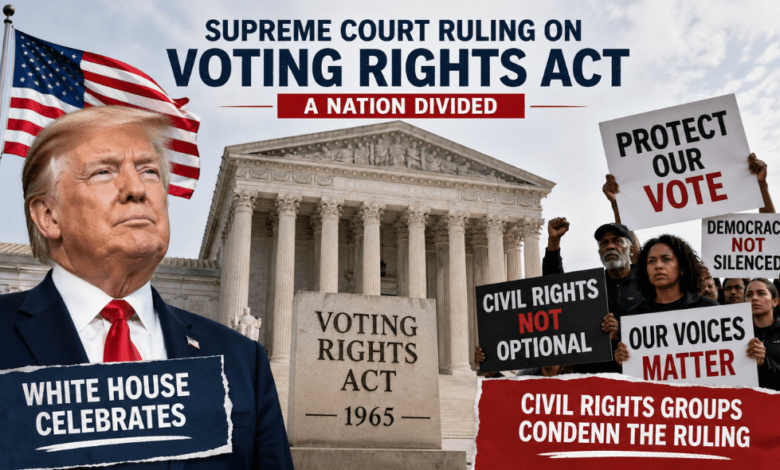
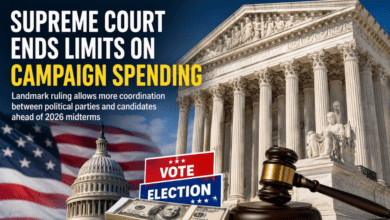
The latest ruling from the US Supreme Court has done more than reshape election law; it has stirred strong emotions across the United States.
For some, it’s a victory for fairness and political balance. For others, it’s a troubling step backward for civil rights. At the heart of the debate is a decision involving Louisiana’s congressional map and its connection to the historic Voting Rights Act of 1965.
Table of Contents
What the Court Decided and Why It Matters
A Case That Goes Beyond Louisiana
On the surface, the ruling focuses on how Louisiana should draw its congressional districts. But its implications stretch far beyond one state.
By limiting how the Voting Rights Act can be used to challenge district maps, the court has made it easier for lawmakers to redraw boundaries even if those changes reduce the influence of minority voters.
A Turning Point in Voting Rights
For decades, the Voting Rights Act has been a safeguard against discrimination at the ballot box. This decision signals a shift in how that protection is applied today.
To many observers, it feels like a turning point, one that could redefine how elections are fought and won in the years ahead.
Celebration from Some, Deep Concern from Others
Supporters See a Win for Political Fairness
The White House welcomed the ruling, calling it a major victory. Supporters argue that electoral districts should not be shaped primarily by race but by broader political considerations.
Donald Trump echoed that sentiment, indicating he would encourage states to revisit and potentially redraw their maps under the new legal interpretation.
Critics Call It a Step Backward
On the other side, civil rights organizations such as the NAACP expressed deep concern.
For them, the ruling risks undoing decades of progress. They fear it may quietly weaken the political voice of communities that have historically faced barriers to representation.
The Fear of Gerrymandering Returns
A Warning from Barack Obama
Former president Barack Obama didn’t hold back in his reaction. He warned that the decision could open the door to more aggressive gerrymandering.
His concern is that lawmakers may now redraw districts in ways that disadvantage minority voters, while framing those decisions as purely political rather than racial.
Why Gerrymandering Feels Different Now
Gerrymandering has long been part of American politics, but this ruling could make it harder to challenge.
That’s what worries many experts: the idea that intent becomes harder to prove, even when the outcome, less representation for certain communities, is clear.
Also Read: White House Huddles with Tech Firms to Solve AI Cybersecurity Risks
What Happens Next Could Shape Elections
States May Move Quickly
With elections always on the horizon, some states are expected to act fast. Redistricting could become a key political tool in the months ahead.
Real Impact on Real People
Beyond the legal language and political strategy, this issue comes down to people, voters who want their voices heard.
If district lines change in ways that dilute certain communities, it could influence not just who wins elections but also whose concerns are represented in government.
More Than a Legal Decision
This isn’t just another court ruling; it’s part of a much bigger story about democracy in the United States. Some see it as a move toward a more neutral system, free from race-based considerations. Others see it as a weakening of protections that were hard-won during the civil rights movement.
The truth will likely unfold over time, as states respond and voters experience the real-world effects.
For now, one thing is clear: the conversation about voting rights in America is far from over.