Democrats Face New Hurdles in 2026 Senate Race
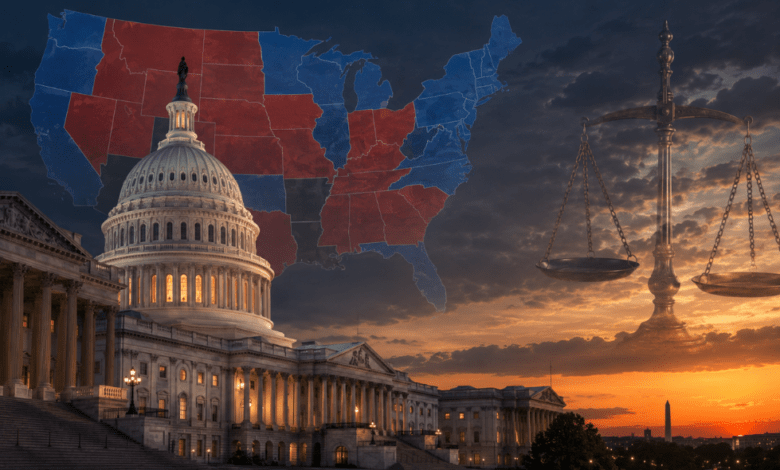
When the 2026 election cycle began, the challenge facing Democrats looked fairly simple to describe even if it was hard to solve. The Senate map was stacked against them and they would need to capture at least two states that President Donald Trump won by double digit margins back in 2024. At the time many strategists doubted the party could even find enough red leaning states worth contesting.
Months later the picture has shifted. Fresh polling suggests Democrats have actually succeeded in putting several red states into competitive territory. Yet a new set of complications has emerged that could make their path to a majority even more difficult than expected, turning the race for Senate control into a far more tangled contest heading toward 2027.
There is real encouragement in the early numbers coming out of traditionally conservative states. The trouble is that this progress may not be enough on its own to hand Democrats the majority they need.
Red States Suddenly Look Competitive
Recent high quality surveys show Democratic candidates performing far better than expected in states that once seemed out of reach.
In Texas a Fox News poll released Friday put Democratic state Representative James Talarico ahead of Republican Attorney General Ken Paxton, 51 percent to 48 percent among registered voters. It is only the newest survey to show the contest essentially tied.
In Iowa state Representative Josh Turek held a four point advantage in a late June Fox poll. A separate New York Times and Siena College survey from the same period found him locked in a near even race with Republican Representative Ashley Hinson, trailing 46 percent to 48 percent among likely voters.
Ohio has produced similarly encouraging signs for Democrats. Former Senator Sherrod Brown led by eight points among registered voters in an early June Fox poll and was running close behind Republican Senator Jon Husted in a later Times and Siena poll, down 47 percent to 50 percent among likely voters.
In Alaska a Times and Siena survey showed Democratic former Representative Mary Peltola trailing Republican Senator Dan Sullivan by just two points.
Polling this early in a cycle cannot reliably forecast final outcomes but the trend lines suggest these Democratic candidates are building the kind of coalition needed to compete statewide. The Fox surveys found the three Democratic contenders winning independent voters by wide margins, with Talarico and Turek both topping a two to one advantage in that group. Both men also drew support from more than 23 percent of Republicans who do not identify with the MAGA wing of their party, though the Ohio poll did not break out that particular figure.
Peltola showed a similar pattern in Alaska, leading among independents 51 percent to 37 percent while pulling in 8 percent of Republican voters.
Whether Democrats can actually close the deal in a state like Texas remains an open question given they have not won a statewide race there in more than three decades. Still the early numbers show they have genuinely created an opportunity to flip at least a couple of these longtime red states.
Why Red State Gains May Not Be Enough
Even with momentum building in unfriendly territory Democrats now face fresh headaches in states that should be comfortably in their column, plus an unpredictable variable named Senator John Fetterman.
In Maine Democrats managed to move past a serious problem when controversial candidate Graham Platner exited the race. His replacement former state Senate President Troy Jackson has yet to prove he can match Platner’s earlier polling strength before scandal derailed that campaign. A University of New Hampshire survey from mid July showed Jackson leading Republican Senator Susan Collins 49 percent to 46 percent among likely general election voters. That same pollster had once shown Platner ahead by nine to eleven points prior to his controversies surfacing.
Michigan presents a more pressing worry for the party. Democrats are defending an open seat left by retiring Senator Gary Peters and there is growing anxiety among establishment figures that Bernie Sanders backed candidate Abdul El Sayed could complicate what should be a winnable race for the party. El Sayed faces Representative Haley Stevens in Tuesday’s Democratic primary. That concern stands out sharply when compared to how Democrats are performing in similarly positioned swing states like Georgia and North Carolina where recent polling shows their candidates ahead by roughly 10 points.
The biggest wildcard in the entire equation may be Fetterman himself. The Pennsylvania senator has repeatedly broken with his party in recent months and has openly floated the idea of switching parties altogether.
Back in May Fetterman insisted he had no plans to leave the Democratic Party. Weeks later he softened that stance, saying he would walk away if the party formally adopted what he described as an anti Israel position, a subject already creating deep internal tension among Democrats.
Polling shows the party’s base has grown increasingly critical of Israel even though this has not become an official Democratic position. Given the pressure coming from that base, it remains unclear exactly how strict a test this represents for Fetterman. As a result Democrats may head into the November general election without a clear picture of how many seats they actually need to secure control of the chamber. Would four flips including two difficult red state wins be enough as originally assumed, or would the party need five wins while also protecting three seats it already holds?
The broader political environment still appears to favor Democrats and their candidates are showing real strength where the party needs it most. Much like the pattern seen in red states, Democratic contenders in Georgia and North Carolina are posting sizable leads among independents while also drawing meaningful support from Republicans who do not align with the MAGA movement.
Even so it increasingly looks like the states deciding Senate control this cycle may not be the red states everyone expected but rather the ones Democrats were always supposed to win easily.
Also Read: Kay Granger First Republican Woman From Texas Dies at 83