Inside Trump’s Beijing Visit – The Human Cost of the Iran War and a Search for Peace
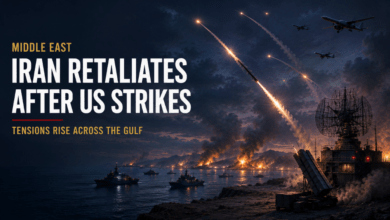
Behind the cold statistics of geopolitics, military budgets, and international trade routes lies a deeply human crisis. As the devastating Iran war stretches past the grueling 75-day mark, families across the globe are feeling the weight of a conflict that shows few signs of slowing down.
For President Donald Trump, a definitive end to the hostility remains elusive. Yet, during his high-stakes diplomatic visit to Beijing, China, the American president struck a noticeably hopeful tone, signaling that a path to peace might run through cooperation with Chinese President Xi Jinping.
Table of Contents
A Glimmer of Diplomatic Hope in Beijing
Speaking to reporters in a recent Fox News interview, Trump expressed a cautious optimism that China could help steer the conflict toward a peaceful resolution.
“He would like to see it end,” Trump says of Xi on Iran war dynamics, suggesting that the Chinese leadership is just as weary of the global instability as the rest of the international community.
Trump went on to suggest that President Xi “probably” holds enough economic and diplomatic leverage to influence Iran’s leadership to come to the negotiating table. In a moment of unexpected optimism, the U.S. president remarked that the current decision-makers in Tehran are proving to be “much more reasonable” than those who were in power when the first shots of the war were fired, offering a rare sign of hope for families praying for a ceasefire.
Protecting Trade Routes and Halting Weapons Lifelines
The discussions between the two world leaders moved beyond vague pleasantries into concrete discussions about regional stability. Trump shared that President Xi agreed China would not supply Iran with military hardware—a crucial commitment that could prevent further escalation and save countless lives on the ground.
Furthermore, both leaders found common ground on the urgent need to restore safe passage through the Strait of Hormuz. Before the outbreak of violence, this vital maritime corridor carried roughly a fifth of the world’s oil supply. Its closure has not only choked global energy markets but has also disrupted the shipping of essential everyday goods, adding a heavy burden to vulnerable populations worldwide.
Unresolved Questions and Missing Confirmations
Despite the promising dialogue, significant diplomatic hurdles remain. Trump visibly brushed aside questions regarding whether Xi explicitly agreed that Iran must never be allowed to develop a nuclear weapon. Additionally, official Chinese channels have yet to release a formal statement confirming the remarks that Trump says of Xi on Iran war strategies, leaving analysts to wonder how much of this optimism will translate into real-world policy.
The Staggering Cost of a Prolonged Conflict
While politicians debate strategy in grand halls, ordinary citizens are the ones absorbing the impact of the war. The ongoing fighting has acted as a severe drag on the global economy, causing a ripple effect of inflation and skyrocketing fuel costs that hit working-class households the hardest.
The Real Impact at the Pump for Working Families
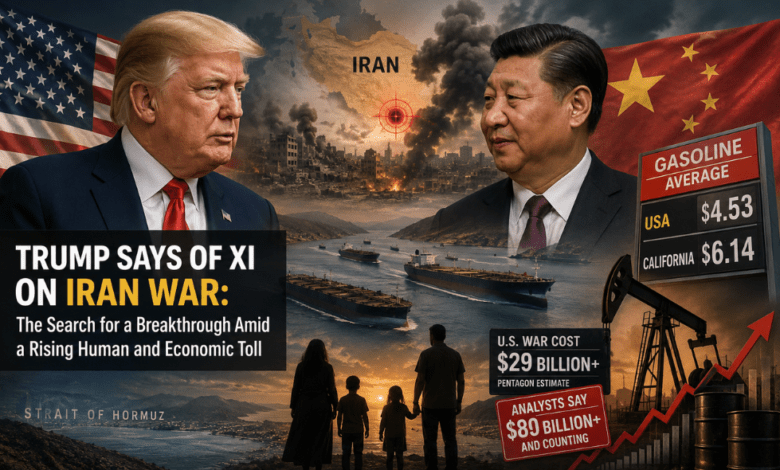
In the United States, the conflict is felt most acutely at the gas pump, squeezing household budgets and making everyday commuting a financial strain. By Friday morning, the national average for a gallon of gasoline had climbed to nearly $4.53.
The financial pressure is distributed unevenly, hitting certain states with devastating force:
- The West Coast and Beyond: Drivers in Alaska, Hawaii, Illinois, Nevada, Oregon, and Washington are seeing averages jump well over $5.00 per gallon.
- The Hardest Hit: In California, the situation is even more severe, with average prices topping $6.14, forcing many families to make difficult choices about their daily spending.
While Trump celebrated an agreement for China to purchase oil and gas from the United States, economists note that it remains entirely unclear how this bilateral trade arrangement will bring immediate relief to struggling consumers at home.
A Multi-Billion Dollar Burden
The financial toll on the American public is also mounting rapidly through defense spending. According to recent estimates from the Pentagon, the war has already cost the United States roughly $29 billion in military assistance, logistics, and regional operations.
However, many independent analysts and critics argue that the official figures barely scratch the surface, suggesting the true economic fallout and deployment costs have surpassed $80 billion.
As the domestic and international pressure intensifies, the statements Trump says of Xi on Iran war efforts will remain under intense scrutiny. The world continues to wait, hoping that these diplomatic conversations will soon transition from political talking points into a tangible, humane resolution for peace.
Also Read: Denise Powell Wins Omaha Primary – The Fight to Save Nebraska’s “Blue Dot”