Trump Returns to Campaign Trail in Pennsylvania as Republicans Eye Crucial Midterm Elections
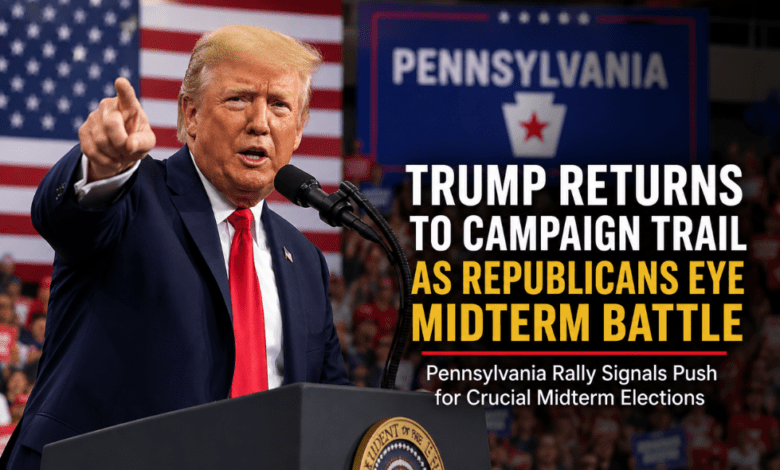
President Donald Trump returned to the campaign trail this week with a high-energy rally in Pennsylvania, reviving the political style that helped define his rise within the Republican Party and secure multiple White House victories.
The event marked a notable shift from recent months, during which Trump had focused heavily on foreign policy challenges, disputes in Washington and efforts to shape his presidential legacy. Standing before a crowd of enthusiastic supporters, the president embraced the combative rhetoric and populist messaging that have long been central to his political identity.
While the rally energized loyal backers and showcased Trump’s enduring appeal among many working-class voters, it also highlighted the broader political challenge facing Republicans ahead of the midterm elections: translating enthusiasm among the party base into support from independent and swing voters.
Table of Contents
Trump Reconnects With His Political Base in Pennsylvania
Pennsylvania has played a significant role throughout Trump’s political career. The state contributed to his previous presidential victories and remains one of the nation’s most important political battlegrounds.
Speaking before a large crowd, Trump projected confidence about the country’s direction and celebrated what he described as major achievements under his administration. The atmosphere closely resembled the rallies that became synonymous with his political movement over the past decade.
A Return to Familiar Political Messaging
Throughout the event, Trump highlighted themes that have consistently resonated with his supporters. He pointed to tariffs, manufacturing initiatives, immigration policies and election integrity issues as evidence of his administration’s accomplishments.
The president also revisited several long-standing criticisms of Democratic leaders and policies, drawing loud reactions from the audience. His remarks demonstrated that many of the themes that energized previous campaigns remain central to his political strategy.
Observers noted that Trump appeared more animated and engaged than during several recent public appearances, benefiting from the direct interaction and enthusiasm of a supportive crowd.
Rally Atmosphere Reflects Enduring Support
The Pennsylvania event underscored the strength of Trump’s connection with many blue-collar and working-class voters. For many attendees, the appeal extends beyond policy discussions and includes a broader sense of political and cultural identity.
Supporters responded enthusiastically throughout the rally, creating an atmosphere reminiscent of Trump’s successful national campaigns. The event highlighted how his political movement continues to draw energy from personal loyalty and a shared sense of opposition to traditional political institutions.
Political analysts have long observed that Trump’s rallies serve not only as campaign events but also as demonstrations of the movement that has reshaped the Republican Party over the past several years.
Midterm Elections Present a Different Challenge
Despite the enthusiastic reception, the political environment surrounding the upcoming midterm elections differs significantly from that of a presidential campaign.
Republicans face the task of defending competitive congressional districts across the country, particularly in suburban areas where voters often prioritize economic concerns and practical policy solutions over partisan battles.
Affordability Concerns Dominate Voter Priorities
One of the most significant challenges facing both parties is the ongoing concern among Americans about the cost of living.
Issues such as housing affordability, grocery prices, healthcare expenses and overall household budgets continue to rank among voters’ top concerns. While Trump addressed economic issues during his speech, critics argue that many voters are looking for more direct solutions to everyday financial pressures.
Public opinion surveys have indicated continued concern about economic conditions, making affordability a central issue likely to influence voter decisions in the months ahead.
For many families, economic stability remains a more immediate concern than broader political debates, creating pressure on candidates to present clear and practical policy proposals.
Economic Messaging Faces Increased Scrutiny
During the rally, Trump expressed confidence that economic conditions would improve and suggested that recent developments could contribute to lower costs for consumers.
However, economic conditions remain a key area of debate among policymakers, voters and political strategists. Republicans seeking to maintain control of competitive districts may need to convince voters that their policies can address rising costs and improve financial security.
The effectiveness of that message could play a crucial role in determining the outcome of closely contested races nationwide.
Political Priorities and Legislative Battles Continue
The president’s public comments this week also reflected ongoing disagreements in Washington over legislative priorities and policy objectives.
Trump has continued to emphasize election-related issues and broader institutional reforms, while critics argue that lawmakers should focus more heavily on affordability and economic concerns affecting everyday Americans.
Congressional Dynamics Could Shape the Next Two Years
The outcome of the midterm elections will have major implications for the remainder of Trump’s term.
If Republicans lose ground in key House districts, the administration could face increased opposition, heightened oversight and greater difficulty advancing legislative priorities.
Conversely, strong Republican performance would strengthen the president’s position and provide additional momentum for his policy agenda.
This reality explains why both parties view the upcoming election cycle as one of the most consequential political contests in recent years.
Supporters Highlight Policy Benefits
While much of the attention focused on Trump’s remarks, supporters who spoke during the event offered personal stories intended to demonstrate the impact of administration policies.
Several participants discussed tax measures and economic initiatives they believe have improved their financial situations and provided greater opportunities for their families.
Personal Experiences Remain Powerful Political Tools
Political campaigns increasingly rely on personal stories to connect policy discussions with everyday life.
Supporters who shared their experiences argued that specific economic policies had helped them manage expenses and improve their quality of life. Such testimonials often play an important role in campaign messaging because they provide real-world examples that voters can relate to.
Political strategists from both parties frequently use these narratives in advertising campaigns and outreach efforts to strengthen voter engagement.
Trump’s Message Looks Backward as Voters Focus on the Future
Trump remains one of the most influential and recognizable figures in American politics. His ability to attract large crowds and dominate political conversations continues to distinguish him from many contemporary leaders.
Yet some analysts argue that his recent speeches have focused heavily on past political battles rather than presenting a detailed vision for future challenges.
Balancing Political Identity With Electoral Reality
The president’s rally demonstrated that his core political formula remains highly effective at energizing supporters. His criticism of political opponents, media organizations and established institutions continues to resonate strongly with his base.
However, winning elections often requires broader coalitions that extend beyond committed supporters.
Independent voters, suburban residents and moderate Republicans are expected to play an important role in determining the outcome of competitive races across the country. Their priorities frequently center on economic opportunity, affordability, public services and long-term stability.
As the midterm campaign season accelerates, Republicans will seek to balance the enthusiasm generated by Trump’s movement with the need to appeal to a wider electorate.
Looking Ahead to November
The Pennsylvania rally demonstrated that Trump remains a dominant force within the Republican Party and continues to command significant enthusiasm among supporters.
At the same time, the event highlighted the central question facing Republicans ahead of the midterms: whether the energy that powers Trump’s political base can translate into broader electoral success.
With affordability concerns, economic uncertainty and competitive congressional races shaping the national landscape, the coming months will test the effectiveness of the party’s messaging and campaign strategy.
For Republicans hoping to secure victories in key districts, enthusiasm alone may not be enough. Expanding support beyond the party’s most loyal voters could ultimately determine the outcome of the election and the trajectory of American politics over the next several years.
Also Read: Trump Delays Housing Bill Signing Over SAVE America Act Demand