Kathy Hochul Draws a Line on NYC Spending as Political Pressures Intensify
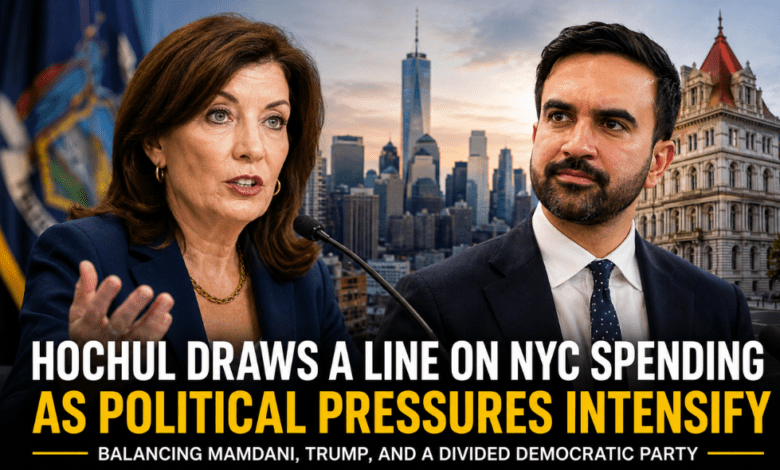
New York Governor Kathy Hochul is signaling that the era of extraordinary financial support for New York City may be coming to an end. After helping Mayor Zohran Mamdani’s administration navigate a massive budget challenge through additional state funding and new revenue measures, Hochul is now making it clear that City Hall must take greater responsibility for managing its own finances.
Her message comes at a pivotal moment in New York politics. While Hochul and Mamdani have built a productive working relationship over the past several months, both leaders are entering a period where difficult financial and political decisions are likely to test that partnership.
At the same time, the governor finds herself balancing pressures from opposite ends of the political spectrum. In Washington, she continues to clash with President Donald Trump’s administration on key issues. Closer to home, she faces a growing progressive movement led by Mamdani and other left-wing Democrats pushing for more ambitious government programs and higher taxes on wealthy residents.
Table of Contents
Hochul Says New York City Must Take Ownership of Its Budget
For much of the past year, Albany stepped in to help New York City confront serious financial challenges. The state provided additional aid, supported changes to pension payment schedules, and backed a tax on high-value second homes that is expected to generate millions in annual revenue. Together, those measures helped city leaders close a significant budget gap without making deep cuts to public services.
But Hochul now believes the responsibility belongs squarely with City Hall. According to the governor, the city’s leadership team must take a closer look at spending, identify programs that are no longer delivering results, and ensure taxpayer dollars are being used efficiently.
A Different Conversation Could Be Coming Next Year
While Hochul has been willing to assist the city financially, her recent comments suggest that future budget discussions may be very different. Now that Mamdani’s administration has its own team in place and direct control over city finances, the governor appears less inclined to step in with additional support unless it is absolutely necessary.
The shift does not signal a breakdown in relations between the two leaders. Instead, it reflects a growing expectation that New York City should be able to manage its own fiscal challenges after receiving substantial help from the state.
A Partnership Built on Shared Priorities
Despite their political differences, Hochul and Mamdani have worked together on several major initiatives. One of their strongest areas of agreement has been childcare. Both leaders have championed efforts to expand access to affordable or free childcare services for working families.
Their cooperation also produced additional financial support for New York City and reforms designed to ease pressure on the city’s budget. For many Democrats, the partnership has demonstrated that moderates and progressives can find common ground when focused on practical issues affecting everyday residents.
Political Benefits for Both Leaders
The relationship has also carried political advantages. Earlier this year, Mamdani endorsed Hochul’s reelection campaign, helping strengthen her standing within Democratic circles. The endorsement was viewed as an important show of unity at a time when some progressives were considering alternative candidates.
At the same time, Hochul’s support helped Mamdani advance key priorities during his first months as mayor.
Key Differences Remain Beneath the Surface
Even with their cooperative relationship, Hochul and Mamdani remain far apart on several major policy questions. The mayor has embraced proposals that would raise taxes on wealthy individuals and corporations to help fund an ambitious progressive agenda. His supporters argue that additional revenue is necessary to expand public services and reduce inequality.
Hochul has consistently taken a more cautious approach. Rather than broad tax increases, she has focused on affordability measures aimed at lowering costs for residents and encouraging economic growth. The governor has repeatedly expressed concern that higher taxes could hurt New York’s competitiveness and drive businesses or high-income earners elsewhere.
These differences reflect a larger debate taking place across the Democratic Party about how best to address economic challenges.
Caught Between Trump and the Progressive Left
One of the biggest political challenges facing Hochul is that pressure is coming from both directions. On one side stands President Donald Trump, whose administration continues to influence major policy debates involving immigration, energy, and the economy.
On the other is a growing progressive movement that wants New York to adopt more aggressive policies on taxation, housing, social spending, and public services. Both camps have passionate supporters, and both are capable of reshaping the political landscape.
For Hochul, navigating between these forces while maintaining a moderate image may be the defining challenge of her political career.
Affordability Remains Voters’ Biggest Concern
While political battles dominate headlines, everyday New Yorkers remain focused on one issue above all others: the rising cost of living. From housing expenses and insurance premiums to utility bills and grocery costs, many residents continue to feel financial pressure.
Recent polling suggests widespread frustration with the state’s progress in making life more affordable. Recognizing this reality, Hochul has centered much of her agenda on policies designed to ease financial burdens.
Measures Designed to Lower Costs
This year, the governor secured support for several initiatives intended to help consumers. The measures include reforms aimed at lowering auto insurance costs, speeding up housing construction, and preventing future increases in energy expenses.
She also backed proposals to eliminate taxes on tips, a policy that gained national attention during the 2024 election cycle.
The challenge, however, is that many of these policies will take time to produce visible results. As voters continue to struggle with everyday expenses, Hochul faces pressure to prove that her affordability agenda can make a meaningful difference.
Immigration Becomes Another Flashpoint
Immigration policy has emerged as another area where Hochul is drawing national attention. The governor approved legislation intended to provide additional protections for undocumented immigrants, including limits on certain forms of cooperation between local authorities and federal immigration agencies.
Supporters say the measures help protect vulnerable communities and strengthen trust between residents and local governments. Critics, including some federal officials, argue that the policies could make immigration enforcement more difficult.
Federal Pushback Continues
Members of the Trump administration have openly criticized New York’s approach and warned that stronger federal enforcement efforts could follow.
While no major escalation has occurred so far, the issue remains a source of tension between Albany and Washington. For Hochul, the debate highlights the broader challenge of defending state policies while responding to pressure from federal officials.
Progressive Challenges Could Reshape Albany
Looking ahead, Hochul may face an increasingly difficult political environment within her own party. Progressive candidates backed by democratic socialist organizations are challenging several established Democratic lawmakers. If those candidates succeed, the balance of power in Albany could shift further to the left.
Such a change would likely increase pressure on Hochul to support policies she has historically resisted, including broader tax increases and larger government spending programs.
Recent endorsement battles have already revealed growing divisions between moderate Democrats and the party’s progressive wing.
A Governor Focused on Pragmatism
As ideological battles intensify, Hochul continues to describe herself as a practical leader rather than a politician driven by labels. Her argument is straightforward: voters care less about political branding and more about whether their elected officials can solve problems. That philosophy has shaped her approach to governing and may become even more important as she prepares for another election campaign.
The Road Ahead
The months ahead are likely to test both Kathy Hochul’s leadership and her political instincts. She must maintain a working relationship with Mayor Zohran Mamdani while making it clear that New York City cannot depend indefinitely on state assistance. She must address voters’ concerns about affordability while defending policies that may take time to show results. And she must navigate pressure from both a resurgent progressive movement and a Republican administration in Washington. How successfully she manages those competing demands could play a major role in shaping New York’s political future.
Also Read: Why US-Iran Talks Are Stuck as Strait of Hormuz Tensions Raise Global Concerns