Roza Gilles – Epstein Abused Her During Work Release
A former teenage model from Uzbekistan says Jeffrey Epstein began assaulting her in 2009 while he was serving time under a lenient work-release arrangement, adding fresh detail to long-running questions about how the convicted sex offender kept operating from behind an ankle monitor.
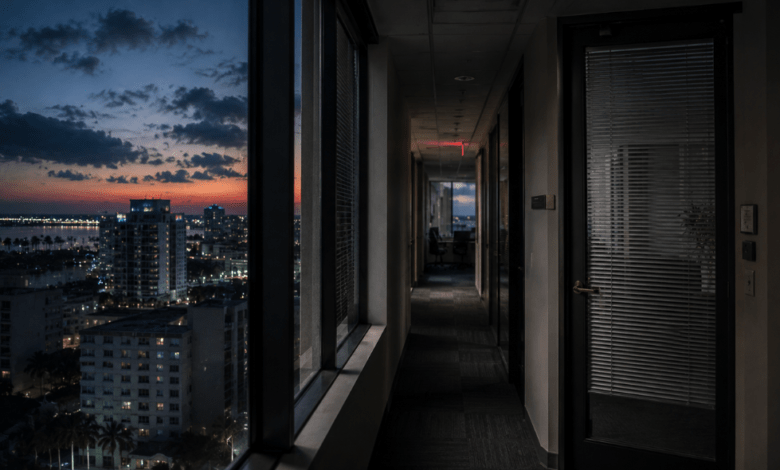
Table of Contents
A New Job That Turned Into a Nightmare
Roza Gilles was 18 years old in the summer of 2009 when she walked into a 14th-floor office suite in downtown Palm Beach for what she believed was an ordinary receptionist shift. Instead, she found a woman rubbing Jeffrey Epstein’s feet.
Roza Gilles had arrived in the United States only months earlier to build a modeling career after being scouted backstage at a fashion event in her native Uzbekistan. The agency that signed her quickly buried her in fees for her visa and housing, leaving her financially stuck. Discouraged and considering a return to Asia, where her modeling work had gone well, she instead accepted a weekend office job Epstein offered her to help cover her mounting bills.
On her first day at that office, the woman beside Epstein waved Gilles over to sit down. As Gilles began rubbing Epstein’s foot, she spotted a black strap around his ankle holding a small blinking device. When she asked about it, she says both Epstein and the woman responded with laughter. Moments later, Epstein instructed her to remove her shirt.
Roza Gilles says she was too stunned to react. The other woman then undressed her, removing her top and bra before leaving the room. What followed, Gilles says, was the first of what became years of sexual assault. She would only later understand that the device on Epstein’s ankle was a court-ordered monitor tied to his conviction for soliciting a minor for prostitution.
Speaking Out for the First Time
Roza Gilles is now sharing her account publicly and in full for the first time, offering CNN a detailed look at how Epstein’s unusual 2008 plea arrangement in Florida let him spend the bulk of his sentence outside a cell — and, according to her and other women, continue abusing young women during that period.
“He didn’t stop what he was doing while convicted. He was doing the same thing,” Roza Gilles told CNN, describing a man she says showed no remorse. She said the abuse left wounds she does not expect to ever fully heal from.
Two additional women, who asked not to be identified, told CNN they were also assaulted by Epstein inside the same Palm Beach office space, known as the Florida Science Foundation. The organization was registered as a nonprofit in November 2007, just before Epstein’s guilty plea and was billed publicly as a funder of scientific and academic research. Both women described a busy, frequently visited 14th-floor suite reachable by elevator, furnished in part with several dome-shaped white noise machines.
Life Behind an Ankle Monitor
According to the women’s accounts, Epstein settled into a routine during his time at the office: coffee and a muffin most mornings, followed by naps on a conference-room futon. He often complained about poor sleep at the Palm Beach Stockade, the minimum-security facility where he was technically incarcerated. One woman recalled the ankle monitor periodically triggering an alarm, sending Epstein rushing outside to reset it.
Survivors say the abuse sometimes happened even while a uniformed officer sat in an adjoining room, ostensibly assigned to supervise the newly designated sex offender. A changing rotation of law enforcement personnel staffed the entrance to the Florida Science Foundation office and two women recalled sensing that the officers themselves seemed uneasy around Epstein — there was little doubt, they said, about who held authority in that building.
Records show Epstein’s legal team arranged for the Florida Science Foundation to pay the Palm Beach County Sheriff’s Office for off-duty deputies to monitor and log office visitors, a total exceeding $128,000 according to a Florida Department of Law Enforcement report. That same report noted investigators reviewed 494 visitor logs and found no evidence of unauthorized contact, though the underlying records have since been destroyed in line with standard retention policy.
Roughly a decade later, in 2019, then-Labor Secretary Alexander Acosta — who as a federal prosecutor had negotiated Epstein’s 2008 plea deal — resigned from his cabinet post days after new criminal charges against Epstein became public. A subsequent 2020 Justice Department review criticized Acosta’s handling of the case as reflecting “poor judgement,” particularly his failure to inform Epstein’s victims that federal charges would not be pursued, though investigators stopped short of finding professional misconduct.
The Palm Beach County Sheriff’s Office ended its work-release program in December 2019, four months after Epstein died in a New York jail cell. A 2021 state investigation concluded no sheriff’s office employee had engaged in criminal conduct connected to their role in Epstein’s work-release or off-duty deputy assignments. The sheriff’s office did not respond to a request for comment on this story.
How a Modeling Contract Became a Trap
Roza Gilles says her path to Epstein began in 2008, when French modeling agent Jean-Luc Brunel approached her backstage at a fashion show in Uzbekistan and offered her representation through his New York-based agency, MC2 Model Management. She would later learn Epstein was a key financial backer of that agency.
The contract, she says, effectively handed the agency control over her finances and daily life. She immediately owed $4,000 for visa costs and faced $1,500 in monthly rent for a crowded Manhattan apartment where models slept several to a room on bunk beds. Within months her debt had climbed to a figure her family back home could never have earned in a year.
She recalled breaking down in tears at MC2’s Miami office in front of Brunel after her modeling bookings dried up and her debt approached $10,000. She had asked about returning to Asia, where she’d previously found steady work, but the agency dismissed the idea.
Roza Gilles says Brunel responded to her distress by making a phone call, then telling her he had just wired $600 to her parents in Uzbekistan. Within minutes, she says, the money had actually reached her family — a demonstration of reach that left her rattled and unsure who Brunel had contacted to pull it off so quickly. The message, she said, was clear: she had no real independence from the agency, or from Epstein. Brunel was later arrested on rape and sexual assault charges and was found dead in his prison cell in 2022.
Not long after, Roza Gilles was sent to West Palm Beach for what was billed as a photo shoot at a large white estate that turned out to belong to Epstein. That initial visit set in motion her relocation to Florida, where Epstein proposed an arrangement she found confusing at the time: modeling during the week, office work at the Florida Science Foundation on weekends — despite the fact that the office job did nothing to advance her modeling career.
She recalls feeling trapped by her circumstances: alone in a new country, in debt and being told that taking a second job was somehow a condition of keeping the first. After that first assault at the office, she says she was raped and molested nearly every weekend at the Palm Beach property. The abuse did not stop once she was allowed to move back to New York in 2010, after Epstein’s period of Florida house arrest concluded.
Justice Department files on Epstein released earlier this year reportedly include numerous emails from modeling scouts pitching young women to him from around the world. Separately, a 2019 lawsuit filed by a woman identified only as Katlyn Doe alleged she, too, was forced into sexual encounters with Epstein at the Florida Science Foundation office — in one instance, the complaint states, alongside another young woman.
Rebuilding a Life and Reckoning With the Past
Roza Gilles believes she crossed paths with other women targeted by Epstein during her time at his properties, recalling encounters with young women who spoke little English, some with Russian accents, whom she believes endured the same treatment.
Her escape came gradually, as her modeling career eventually gained traction in New York and she achieved enough financial footing to walk away from Epstein’s orbit. She later moved to the Midwest, married a man named Pat and built a new career as a fitness coach and trainer.
For years, Roza Gilles kept her history hidden from nearly everyone close to her, including her own parents. That privacy was upended earlier this year when the release of the Epstein files publicly exposed her name along with correspondence she’d exchanged with Epstein — material she never intended for public consumption.
“It was my story to tell. It wasn’t something I wish anybody read,” she said.
Roza Gilles says she has watched from a distance as other survivors have pushed publicly over the past year for full disclosure of the Epstein files and renewed investigation into his associates. Though she has been invited to join those advocacy efforts, she says she isn’t yet ready. She traveled to Washington, D.C., when a group of survivors gathered on the Capitol steps, but chose to stay on the sidelines rather than speak.
“They were telling their stories and that started destroying me on the inside,” she said, adding that she still feels anger toward the government for failing to protect her at the time.
Roza Gilles says she continues working through the weight of what happened to her and hopes that path eventually leads her to stand alongside other survivors — just not yet.
Also Read: Troy Jackson Leads Race to Challenge Susan Collins