Budget Clash – Senate Blocks Taxpayer Funds for Trump’s White House Ballroom

In a sharp legislative blow to the administration, a senior congressional official has struck down a controversial Republican plan to use taxpayer dollars to help fund President Donald Trump’s ambitious White House ballroom expansion.
The weekend ruling marks a significant procedural victory for congressional Democrats, who have spent weeks arguing that national security funds should not be used as a backdoor vehicle to finance a high-profile, luxury real estate overhaul at the executive mansion.
Table of Contents
The Senate Referee Steps In
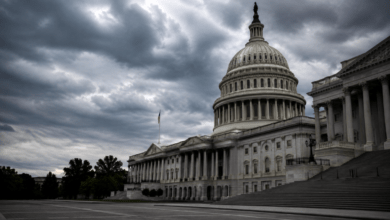
The political gridlock came to a head on Saturday when the Senate’s official parliamentarian intervened in a high-stakes budget battle. Siding with fierce objections raised by Democrats, the chamber’s non-partisan rule-keeper determined that specific security allocations within a massive federal spending package could not legally be tied to the ballroom project.
The ruling exposes a glaring contradiction in how the project is being financed. While President Trump has repeatedly assured the public that the $400 million ballroom would be funded entirely through private donations, his allies in the Senate have simultaneously attempted to leverage a $1 billion taxpayer-funded Secret Service upgrade to absorb a massive chunk of the project’s infrastructure costs.
Security Fears and a Fast-Tracked Project
The urgency behind the funding push intensified dramatically following an April security scare. A shooting broke out at an off-site hotel gala attended by Trump, deeply rattling his security detail and prompting the administration to fast-track the White House expansion.
Proponents argued that building a secure, state-of-the-art venue directly on the White House grounds is no longer just a luxury—it is a critical necessity to keep the president safe while hosting world leaders and diplomatic events.
A Procedural Gamble Meets the “Byrd Rule”
To push the funding through without needing bipartisan consensus, Senate Republicans have been relying on a complex, aggressive legislative maneuver known as the budget reconciliation process. Because they hold the majority in the Senate, this strategy allows them to pass sweeping fiscal bills with a simple majority, entirely neutralizing the threat of a Democratic filibuster.
The controversial $1 billion ballroom provision was quietly tucked deep inside a sprawling Department of Homeland Security funding package primarily aimed at immigration and border enforcement. The money was specifically earmarked for a total overhaul of the historic East Wing—the very site where construction crews are preparing the footprint for Trump’s vision.
Why the Gimmick Failed
However, Senate Parliamentarian Elizabeth MacDonough—who has served as the chamber’s quiet, independent referee since 2012—blew the whistle on the plan.
MacDonough ruled the provision out of order on two fronts. First, she agreed that funding a ballroom fell completely outside the legal jurisdiction of the Senate Judiciary Committee. Second, she determined that the move directly violated the historic “Byrd Rule”—a strict congressional guardrail designed to prevent lawmakers from stuffing unrelated, non-budgetary passion projects into fast-tracked spending bills.
“Americans Don’t Want a Ballroom”: Democrats Dig In
Following the decision, Democratic leaders were quick to claim victory, though they openly acknowledged that the political warfare over the budget is far from over.
“Republicans tried to make taxpayers foot the bill for Trump’s billion-dollar ballroom. Senate Democrats fought back — and blew up their first attempt,” Senate Minority Leader Chuck Schumer wrote in a fiery statement on X on Saturday evening.
Schumer warned voters that the administration’s allies are already looking for structural loopholes. “Now Ballroom Republicans say they’re going back to the drawing board to try again. And Senate Democrats will be ready to stop them again. Americans don’t want a ballroom. They don’t need a ballroom. And they sure as hell should not be forced to pay for one.”
The Next Battleground
Senator Jeff Merkley of Oregon, the top Democrat on the committee handling the bill, echoed that skepticism. Merkley told reporters he fully expects Republicans to rewrite the legislation “to appease Trump,” but insisted that his caucus is dug in and ready to challenge any subsequent revisions or alternative funding avenues introduced in the coming days.
Smashed Drywall and Legal Warfare
The fiscal fight in Washington is mirrored by an equally bitter battle on the White House grounds. The physical transformation of the executive mansion began in earnest last October, when construction crews effectively gutted portions of the historic East Wing to make room for what Trump has boldly promised will be the “finest ballroom of its kind, anywhere in the world.”
Preservationists Fight for the History Books
The demolition of such a storied piece of American history immediately provoked a fierce backlash from historians and preservationists. The National Trust for Historic Preservation filed a federal lawsuit against the administration, arguing that altering a landmark as culturally significant as the White House without explicit, formal congressional approval is a direct violation of federal law.
For now, the physical work hasn’t stopped. In April, an appeals court handed the administration a temporary legal victory, ruling that construction on both the underground foundations and above-ground structures could continue while the broader lawsuit winds its way through the courts.
But while the bulldozers are legally allowed to keep moving, the Senate’s weekend ruling means the administration’s financial safety net has vanished. If the project is to survive, the White House will have to look beyond the American taxpayer to foot the bill.
Also Read: Inside Trump’s Beijing Visit – The Human Cost of the Iran War and a Search for Peace