Ashley Hinson Says Prolonged Iran Conflict Could Become Political Challenge as Iowa Senate Race Heats Up
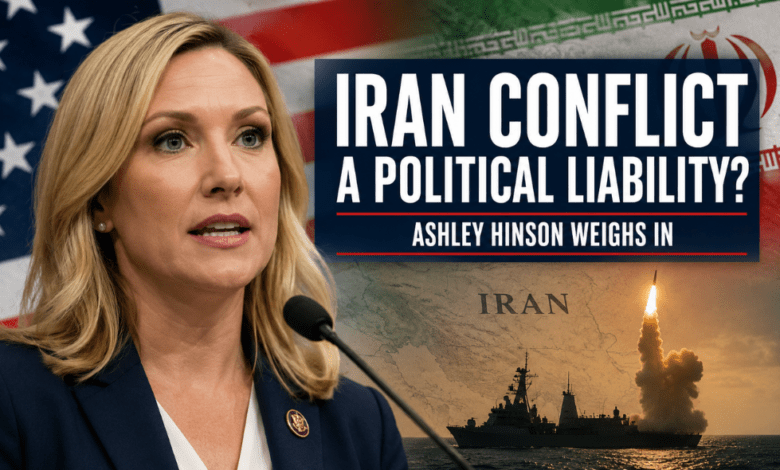
Iowa Republican Senate candidate Ashley Hinson has said that a prolonged U.S. conflict with Iran could become a political challenge for Republicans if it continues for much longer, according to remarks made during a campaign stop in Fort Dodge, Iowa.
Hinson made the comments while speaking with a voter who asked about the conflict and concerns over a potential military draft. The conversation, which was later obtained by media outlets, offered a glimpse into how the Republican candidate views the human and political costs of a conflict that continues to affect American service members and their families.
While discussing the situation, Hinson stressed that her biggest concern remains the safety of U.S. troops and the goal of preventing Iran from obtaining a nuclear weapon.
Table of Contents
Hinson Hopes Conflict Can Be Resolved Soon
During the exchange, Hinson said she hopes progress can be made within the coming weeks, suggesting that a prolonged conflict could create difficulties not only for policymakers but also for elected officials facing voters.
She acknowledged that public support for military action can weaken when conflicts drag on, especially when communities continue to experience the loss of service members.
“If it drags on beyond that, it’s a political liability for us too,” Hinson said during the conversation.
Impact of Military Losses Felt Across Iowa
Hinson connected her concerns to the sacrifices made by Iowa families.
She said she has attended four funerals for Iowa service members since December, describing those experiences as heartbreaking. Her remarks highlighted the personal toll military conflicts can have on local communities, far beyond the political debates taking place in Washington.
For many families, the consequences of war are measured not in policy discussions but in the loss of loved ones.
Defers to Trump Administration on Diplomatic Efforts
When asked whether she had a specific timeline for how the conflict might unfold, Hinson said she was relying on President Donald Trump and his foreign policy team to handle ongoing negotiations.
The administration has been working toward extending the current ceasefire while also pursuing discussions related to Iran’s nuclear program.
Although a ceasefire remains in place, occasional clashes have continued and uncertainty surrounding the region has contributed to disruptions in global energy markets and shipping routes.
Preventing a Nuclear-Armed Iran Remains Her Priority
Despite concerns about how long the conflict could last, Hinson made clear that she believes Iran must not be allowed to develop a nuclear weapon.
She described that objective as her primary concern and said any negotiations or military decisions should ultimately be judged by whether they prevent Iran from becoming a nuclear power.
Her comments reflect a position widely held among many Republican leaders who support a firm stance on Iran while also expressing caution about a prolonged military engagement.
Questions About a Military Draft Surface at Campaign Event
The conversation also touched on concerns that have circulated among some voters regarding the possibility of a military draft.
Hinson said she had not heard of any plans to reinstate one and expressed hope that such a step would not become necessary.
“We don’t need one. I hope we don’t need one,” she said.
White House Has Rejected Draft Speculation
Earlier in the conflict, the White House stated that there were no plans to implement a military draft.
Hinson echoed that position, seeking to reassure voters who remain concerned about the potential expansion of U.S. military involvement.
The topic continues to generate questions as Americans watch developments overseas and assess what a longer conflict could mean for military families.
Families of Fallen Soldiers Continue to Support the Mission
Although Hinson spoke openly about the pain experienced by military families, she also shared what she said were conversations with relatives of fallen service members.
According to Hinson, the families she visited expressed support for continuing efforts to achieve the mission’s objectives despite their personal losses.
Grief and Resolve Exist Side by Side
Hinson said many of those families believed the mission should be completed, even as they mourned loved ones who had died in service.
Their perspective, she suggested, reflects the difficult balance many military families face—coping with grief while continuing to support the goals for which their relatives served.
The comments underscored the emotional complexity surrounding military conflicts and the sacrifices made by those closest to the service members involved.
Senate Race Takes Shape Ahead of November Election
Hinson’s remarks come as Iowa prepares for a competitive Senate election that could draw national attention.
She is set to face Democratic nominee Josh Turek in November for the Senate seat being vacated by Republican Sen. Joni Ernst, who is not seeking re-election.
With control of the Senate expected to be a major issue in the 2026 election cycle, races such as Iowa’s are likely to receive significant attention from both parties.
Campaign Says Americans Do Not Want Endless Wars
Responding to the attention generated by Hinson’s comments, a campaign spokesperson said that prolonged military conflicts are unpopular with voters and emphasized that efforts are being made to avoid an extended war.
The spokesperson added that President Trump is working to keep Americans safe while preventing the conflict from becoming a long-term military engagement.
A Debate That Extends Beyond Politics
Hinson’s remarks reflect a broader conversation taking place across the country about the costs of military conflict, the challenges of national security and the impact war has on communities that send their sons and daughters into uniform.
As the Senate campaign moves forward, questions surrounding the Iran conflict, military strategy and the sacrifices made by service members are likely to remain central issues for many voters.
For families who have already lost loved ones, however, the discussion is about far more than politics—it is about the human cost that accompanies every military conflict.
Also Read: Jerome Powell Warns Political Pressure on Fed Could Damage Public Trust