Trump Criticizes Netanyahu Over Lebanon Strikes Amid Push for Regional Peace
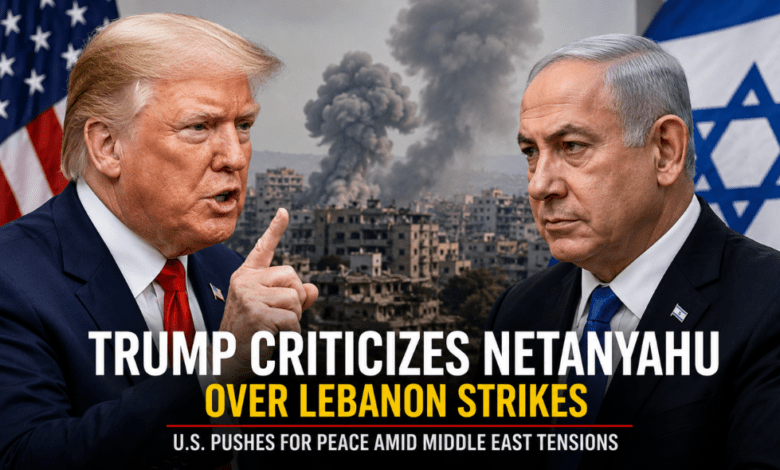
President Donald Trump has openly criticized Israeli Prime Minister Benjamin Netanyahu’s handling of military operations in Lebanon, signaling growing differences between Washington and Jerusalem over the ongoing conflict involving Hezbollah.
Speaking during a press conference at the G7 summit in France, Trump suggested that Israel’s military response in Lebanon has at times been excessive and urged a more measured approach. His remarks come as the United States seeks to promote diplomatic efforts aimed at reducing tensions across the Middle East and advancing a broader framework for regional stability.
Table of Contents
Trump Calls for a More Restrained Military Response
During his remarks, Trump acknowledged Israel’s right to defend itself against security threats but argued that military actions should be carefully calibrated to avoid unnecessary destruction.
The president indicated that he has privately expressed concerns to Netanyahu regarding the scale of some Israeli responses to Hezbollah-related incidents. According to Trump, military retaliation does not always require large-scale strikes, particularly when the immediate threat level is limited.
Concerns Over Civilian Impact
Trump emphasized the humanitarian consequences of continued military operations in Lebanon, particularly in densely populated areas. He pointed to the challenges faced by civilians living amid ongoing hostilities and stressed the importance of minimizing harm to non-combatants.
His comments reflected broader concerns within the international community about the impact of prolonged conflict on Lebanon’s infrastructure, economy, and civilian population.
Lebanon Remains at the Center of Regional Tensions
The president also spoke about Lebanon’s historical significance and cultural contributions to the region. He described the country as a nation that once played a leading role in education, medicine, law, and intellectual development across the Middle East.
Trump lamented the country’s long period of instability, suggesting that decades of political turmoil and conflict have significantly weakened its institutions and quality of life.
Ongoing Strikes Continue Despite Diplomatic Efforts
The latest criticism comes amid continued Israeli operations targeting Hezbollah positions in Lebanon. Military activity has persisted even as the United States works to advance diplomatic initiatives designed to reduce regional tensions.
Recent negotiations involving Iran have become a central component of Washington’s broader strategy to prevent further escalation. However, ongoing military developments have complicated efforts to secure lasting stability.
Growing Friction Between Trump and Netanyahu
While the United States and Israel remain close allies, Trump’s latest remarks highlight increasing differences over how to manage security challenges in the region.
Reports in recent weeks have suggested that the U.S. administration has become increasingly frustrated by the continuation of military actions at a time when diplomatic channels are being actively pursued. Trump has repeatedly expressed the view that sustained negotiations offer the best opportunity to reduce conflict and prevent a wider regional confrontation.
Peace Efforts Face Significant Challenges
The administration has been working with international partners to promote agreements that could ease tensions between key regional actors. However, progress remains fragile as military operations and political disagreements continue to shape developments on the ground.
Analysts note that balancing Israel’s security concerns with broader diplomatic objectives remains one of the most difficult challenges facing policymakers in Washington and across the international community.
Trump Expresses Confidence in Future Cooperation
Despite his criticism, Trump indicated that he remains confident that the United States can continue working closely with Israel to address ongoing security concerns while pursuing diplomatic solutions.
He reiterated support for Israel’s right to protect its citizens but stressed that military responses should be proportionate and mindful of their humanitarian consequences. The president also underscored the need for greater stability in Lebanon, particularly in Beirut, where civilians continue to face uncertainty amid the broader conflict.
As tensions persist across the Middle East, Trump’s comments illustrate the delicate balance between military strategy and diplomacy. The coming weeks are expected to be crucial in determining whether ongoing negotiations can reduce hostilities and create conditions for a more stable regional environment.
Also Read: 2028 Democratic Race – Ossoff and Warnock Gain Momentum