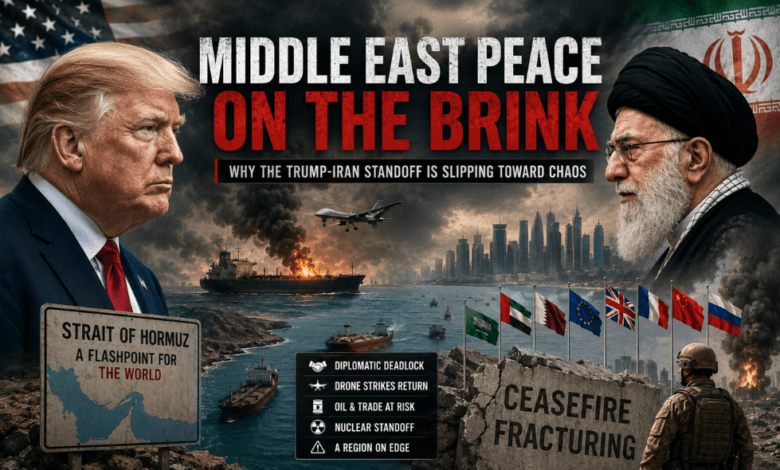
The hope that last month’s ceasefire might lead to a lasting peace in the Middle East is rapidly evaporating. What began as a cautious pause in hostilities has devolved into a tense diplomatic standoff, with U.S. President Donald Trump flatly rejecting Iran’s latest counter-proposal. As the rhetoric sharpens, the reality on the ground is growing grimmer: drone strikes are once again lighting up the skies over the Gulf, and the shadow of renewed war is lengthening.
Table of Contents
A “Totally Unacceptable” Deal: The Diplomatic Wall
The latest attempt to bridge the gap between Washington and Tehran arrived via Pakistani mediators, but the bridge seems to have buckled before anyone could cross it. The Iranian proposal, intended to end the month-long stalemate, contained demands that the White House found impossible to stomach.
According to reports from the Tasnim news agency, Tehran’s “red lines” included the immediate lifting of all U.S. sanctions and an end to the naval blockade that has turned the Strait of Hormuz into a parking lot for global trade. For the Iranian leadership, these aren’t just bargaining chips—they are existential requirements for survival.
President Trump, however, was in no mood for compromise. Taking to Truth Social, he characterized Iran’s history as “playing games” for 47 years and dismissed the latest text with a blunt verdict: “I don’t like it.” This rejection marks a significant setback for those hoping that a 14-point memorandum presented by the U.S. just a week ago would lead to a breakthrough.
The Nuclear Tug-of-War
At the heart of the disagreement is a fundamental lack of trust regarding nuclear capabilities. The U.S. is pushing for:
- A 20-year freeze on all uranium enrichment.
- The physical removal of Iran’s enriched uranium stockpile.
- The permanent dismantling of nuclear infrastructure.
Iran’s counter-offer—proposing a much shorter freeze and a refusal to tear down their facilities—was seen in Washington not as a peace gesture, but as a tactical delay.
Netanyahu’s Warning: “It’s Not Over”
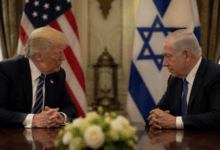
While diplomats argue over text, military leaders are preparing for the worst. Israeli Prime Minister Benjamin Netanyahu has been vocal about his skepticism, warning that a ceasefire is meaningless as long as Iran holds its nuclear stockpile.
In a recent interview with 60 Minutes, Netanyahu didn’t mince words: “You go in and you take it out.” His insistence that the only way to ensure safety is a physical, ground-based operation to seize nuclear material highlights the extreme tension defining the Israel-Iran relationship. While Trump has suggested that Space Force satellites and high-tech surveillance are enough to “blow them up” if they move the material, Netanyahu’s “boots on the ground” rhetoric suggests a much more immediate and visceral threat.
The Human Cost of a Fraying Truce
For the people living in the Gulf, the “ceasefire” feels increasingly like a technicality. Over the weekend, the quiet was shattered by a series of drone incursions. From the UAE to Kuwait, air defense systems were engaged to intercept threats. In Qatar, a drone strike on a commercial vessel sparked a fire, serving as a terrifying reminder of how vulnerable the world’s energy supply remains.
Chaos in the Strait
The Strait of Hormuz has become a site of high-stakes extortion and military muscle-flexing. Iran is now reportedly demanding a $2 million “toll” for passage, while the U.S. continues a blockade that has disabled commercial ships. These aren’t just military maneuvers; they are actions that drive up the price of oil and food for families across the globe.
The failure of “Project Freedom”—Trump’s ambitious attempt to force open shipping lanes—showed just how complicated the regional alliances have become. When Saudi Arabia refused to allow U.S. planes to use its bases for the mission, it became clear that even America’s closest allies are wary of a full-scale escalation.
A Global Crisis Seeking a Solution
The stakes extend far beyond the borders of the Middle East. President Trump is under immense pressure to find a resolution before his upcoming visit to China, a nation that desperately needs the Strait of Hormuz to stay open. Meanwhile, European leaders from the UK and France are scrambling to organize a 40-nation summit to restore maritime trade, a move Iran has already labeled a provocation.
Even Russia has entered the fray, with Vladimir Putin offering to take custody of Iran’s uranium to act as a neutral buffer. It is a crowded, complicated stage where one wrong move could trigger a cascade of violence.
The Silent Tragedy in Lebanon
Perhaps the most tragic evidence of the ceasefire’s failure is in Lebanon. While the truce technically covers the region, the reality is one of ongoing loss. On Saturday, 36 people were killed in strikes that the Israeli military describes as necessary for defense against Hezbollah. For the families of the paramedics and civilians caught in the crossfire, the “peace process” offers little comfort.
As the world watches the high-level meetings in Europe and the upcoming trip to China, the message from the Middle East is clear: the ceasefire is breathing its last breaths. Without a radical shift in diplomacy, the “final touches” Trump spoke of may soon become the opening salvos of a renewed and devastating conflict.
Also Read: Trump Celebrates Virginia Supreme Court Striking Down Redistricting Map