Rick Scott Rejects Senate GOP Leadership Rumors
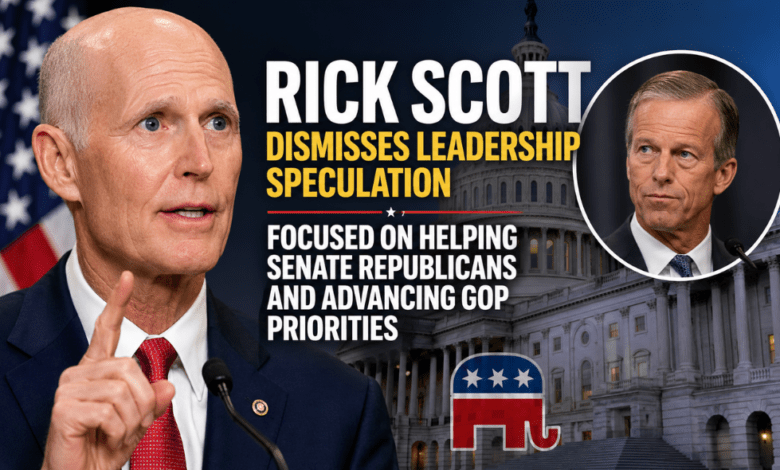
Florida Senator Rick Scott is once again at the center of political speculation in Washington, but he insists there is no hidden agenda behind his recent actions.
Questions about Scott’s future ambitions resurfaced after he arranged for President Donald Trump to address Senate Republicans during a politically sensitive period and later circulated recommendations on how the Republican Party should prepare for upcoming elections. While some observers interpreted these moves as signs of a potential leadership campaign, Scott has pushed back strongly against that narrative.
Instead, the Republican senator says he is focused on contributing ideas, helping shape policy discussions and advancing conservative priorities within the Senate.
Table of Contents
Rick Scott Says He Is Not Preparing a Leadership Bid
Despite renewed attention surrounding his political influence, Scott maintains that he has no plans to challenge Senate Majority Leader John Thune.
The Florida lawmaker emphasized that he is comfortable in his current role and believes Thune will continue leading the Republican conference without facing a serious challenge.
According to Rick Scott, expressing opinions about legislative strategy or party priorities should not automatically be interpreted as a sign of leadership ambitions.
Frustration Over Political Speculation
Rick Scott expressed frustration with recurring suggestions that every policy proposal or strategic recommendation he offers is part of a broader effort to seek power within the Senate.
He argued that senators should be free to present their views on important issues without triggering speculation about future leadership contests.
His comments come as political observers continue examining the evolving balance of influence among Senate Republicans.
A Senator Determined to Stay Actively Involved
Throughout his political career, Scott has developed a reputation for taking an active role in shaping debates and advocating policy positions.
After building a successful business career and serving two terms as governor of Florida before entering the Senate, Scott has consistently sought opportunities to influence major policy discussions.
His recent comments reflect a belief that senators should take more votes on significant issues, even when the outcome appears unlikely to change.
Advocating More Public Votes
Rick Scott argues that legislative votes serve an important purpose beyond determining whether a bill becomes law.
In his view, votes allow lawmakers to publicly demonstrate where they stand on key issues and provide voters with a clearer understanding of policy differences between political parties.
He believes the Senate should be more willing to hold votes on contentious proposals rather than avoiding debates that could expose internal divisions.
A History of Challenging the Status Quo
Scott’s willingness to pursue his own political path is not new.
His tenure leading the Senate Republican campaign organization ahead of the 2022 midterm elections generated significant debate within Republican circles. Some senators criticized his approach to contested Republican primaries, while others questioned policy proposals released through his political operation.
Following the 2022 elections, Scott challenged longtime Republican leader Mitch McConnell for leadership of the Senate conference. Although his effort attracted limited support, it demonstrated his willingness to challenge established leadership structures.
Previous Leadership Campaigns
Scott made another attempt to secure a top leadership position after McConnell stepped aside.
In that contest, he competed against other Republican candidates but ultimately fell short as John Thune emerged victorious.
Although those campaigns did not succeed, they reinforced Scott’s image as a senator unafraid to advocate for alternative approaches within the Republican Party.
Relationship With Thune Appears More Cooperative
Unlike his often-contentious relationship with McConnell, Scott’s interactions with Thune have generally been more constructive.
Thune has publicly praised Scott’s work leading the Senate Steering Committee, a role that has allowed the Florida senator to organize discussions and invite influential figures to meet with Republican lawmakers.
The position has become one of Scott’s most significant sources of influence within the conference.
Steering Committee Expands Scott’s Reach
As chair of the Steering Committee, Scott has brought prominent political and business leaders into conversations with Senate Republicans.
These meetings have included high-profile figures from both the Trump administration and the broader conservative movement.
The committee has become an important platform for discussing policy priorities and political strategy, helping Scott maintain a visible presence within the party’s internal decision-making process.
Growing Influence Through Strong Trump Connections
One factor contributing to Scott’s rising influence is his close relationship with President Donald Trump.
Scott remained a loyal supporter of Trump during periods when the former president faced political challenges and that loyalty appears to have strengthened ties between the two men.
Republicans familiar with internal party dynamics increasingly view Scott as a key bridge between Senate Republicans and Trump’s political operation.
Connections Across the Administration
In addition to his relationship with Trump, Scott maintains connections with several influential administration officials and longtime Republican figures.
Political observers note that these relationships have increased his relevance within party discussions and provided him with access to some of the most powerful voices in contemporary Republican politics.
These connections could continue to enhance Scott’s standing within the Senate conference as Republicans prepare for future elections and legislative battles.
Questions Remain About Scott’s Long-Term Political Future
Although Scott dismissed speculation about an immediate leadership challenge, he did not provide a definitive answer about his long-term future in public service.
The senator is not facing reelection for several years, giving him flexibility to consider future opportunities.
No Interest in a Cabinet Role
Rick Scott indicated that he is not interested in serving in a Cabinet position, suggesting that executive branch service does not align with his current goals.
Instead, he said future decisions will depend largely on whether he believes he is making a meaningful contribution and remaining productive in public life.
That response leaves open the possibility that Scott could continue seeking influential roles within Republican politics in the years ahead.
Trump Meeting Highlights Internal GOP Priorities
Recent attention surrounding Scott intensified after he invited Trump to attend a closed-door meeting with Senate Republicans.
Scott reportedly envisioned a policy-focused discussion centered on several major issues facing the conference.
These topics included the future of the Senate filibuster, advancing election-related legislation and avoiding another government shutdown.
Meeting Takes an Unexpected Turn
According to accounts from attendees, the discussion did not unfold as Scott originally intended.
Instead of concentrating primarily on legislative strategy, much of the meeting focused on frustrations and disagreements related to recent Senate actions and broader political concerns.
Even so, Scott believes the gathering ultimately produced positive results by reinforcing Republican focus on key priorities.
Renewed Push for the SAVE America Act
Among Scott’s top legislative priorities is the SAVE America Act, a Republican-backed elections proposal that has become a major focus for Trump and many conservatives.
Scott continues to advocate aggressively for the legislation despite skepticism from some colleagues about its prospects in the Senate.
Exploring Different Legislative Paths
The senator has outlined several potential strategies for advancing the bill.
One option involves forcing an extended Senate debate that would require opponents to maintain active opposition on the chamber floor. Other possibilities include dividing the legislation into smaller pieces or attempting to advance portions through budget-related procedures.
While some Republicans remain doubtful that these approaches would succeed, Rick Scott argues that the issue deserves continued attention.
Internal Republican Debate Continues
The SAVE America Act has become a source of frustration for some Senate Republicans who question whether continued focus on the proposal is politically productive.
Nevertheless, Rick Scott believes Republicans should continue pressing the issue and making their position clear to voters.
His approach reflects a broader philosophy that political parties should publicly defend their priorities rather than retreat from difficult legislative fights.
Balancing Ambition and Influence
Whether or not Scott pursues another leadership role in the future, his influence within the Republican conference appears stronger than it has been in years.
Through his leadership of the Steering Committee, his relationship with President Trump and his willingness to advocate policy ideas, Scott has secured a prominent place in Senate Republican politics.
For now, he continues to reject suggestions that he is preparing a leadership campaign, insisting that his focus remains on contributing ideas and advancing policies he believes will benefit both the Republican Party and the country.
As debates over Senate strategy, election legislation and the future direction of the GOP continue, Scott is likely to remain one of the most closely watched voices within the Republican conference.
Also Read: John Bolton Pleads Guilty in Classified Information Case, Faces Potential Prison Sentence